
Madrid has encountered a unique dilemma: a staggering 24 tons of volcanic sand from La Palma. This intriguing situation arose from an initiative aimed at promoting Canarian cultural heritage on the Peninsula. While the idea was to celebrate Canarian traditions, it has left behind a rather peculiar legacy—piles of volcanic sand with unclear future plans. This conundrum reflects both the cultural ambitions and logistical challenges faced by local governments.
Let’s elaborate on this.
Presuming Culture. May 17 marked a significant day in the annals of Canarian culture, especially for its cherished sport: Canarian wrestling, a discipline deeply rooted among the islands’ first inhabitants. Although widely practiced in the Canary Islands, this sport lacks visibility on the mainland. To change this, as part of the Month of the Canary Islands, the government organized a historic event: the first official Canarian wrestling match in Madrid .
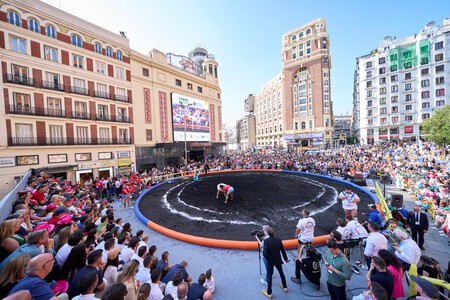
</div>Fighters and Much (Much) Arena. This historical match featured competitors from the Saladar de Jandía and the Candelaria de Mirca, two prominent teams in the discipline competing in the DISA Tournament of the Canary Islands . To amplify the event’s significance, volcanic sand was imported from La Palma to build a unique wrestling ring right in the heart of Callao, creating a vivid connection to the Canarian identity .
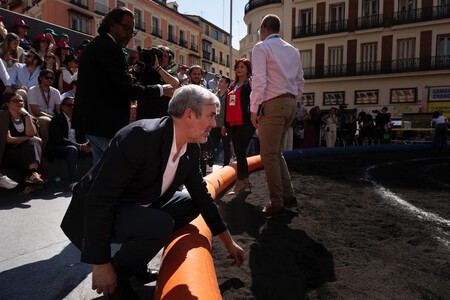
A 24 tons “Ring”. The event was a resounding success. Visuals shared by the Canarian government displayed a bustling crowd eager to witness the traditional sport. The matches took place in a makeshift arena accommodating 200 spectators . Notably, the event was graced by President Fernando Clavijo along with other prominent figures from the Canarian community , highlighting the importance of the occasion.
The selection of the volcanic sand was particularly thoughtful; it originated from the Tajogaite eruption of 2021 on La Palma. This choice was symbolic, representing a renewed connection to Canarian roots and identity. The Canarian government proudly announced the transport of 24 tons of this sand, emphasizing its cultural significance.
</div>And What Happened to That Sand? The bout concluded with Saladar de Jandía emerging victorious over Candelaria de Mirca (12-10), but the pressing question became: what next for the volcanic sand? Media outlet eldiario.es recently posed this inquiry, revealing that the sand seemed to disappear without a trace.
“ Without a trace of the 24 tons ,” remarked the newspaper. This revelation caught many off guard, especially given that the original agreement stipulated the sand would be donated to Madrid City Council for use on beach volleyball courts. However, the Council claimed there is no record of this agreement.
It Wasn’t Lost The saga taking a twist. Further investigation by Eldiario.es uncovered that instead of being lost, the 24 tons of volcanic sand were safely stored in an industrial warehouse in Torrelodones. The decision against allocating it for beach volleyball came after Madrid technicians identified potential issues with its heat retention properties.
What Will It Be Used For? Currently, the future use of the volcanic sand remains uncertain. The Madrid Department of the Environment is reportedly exploring viable options. They hope to find an environmentally friendly use for this Canarian gift, indicating it lacks commercial value. Nonetheless, the symbolic significance of the volcanic sand remains strong, as underscored by the Canarian government.
The bags continue to await a collaboration agreement between local authorities to determine the sand’s future utilization. Its potential for environmental purposes presents an opportunity for further community engagement, while retaining the cultural essence of the original initiative.
Images | The Government of the Canary Islands (X) and Canary Islands
In Xataka | The Canary Islands have seven islands, but only one has escaped from the hordes of tourists: its secret is literally on earth.