
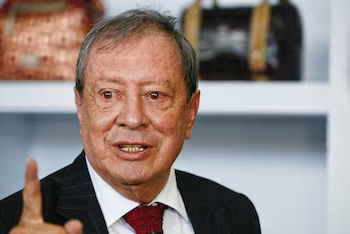
The Business Sector Lacks Eggs: Mario Hernández’s Criticism Post-2026 Elections
A Shift in the Political Landscape
The Colombian legislative elections held on March 8, 2026, marked a significant change in the political landscape. With new compositions in both the Senate and the House of Representatives, the nation is now poised for a crucial presidential race. Among the voices emerging in this political climate is renowned businessman Mario Hernández, who recently ran for the Senate representing the Democratic Center.
A Call for Accountability
Despite the Democratic Center’s favorable outcomes in the elections, Hernández expressed strong concerns about the business community’s engagement in the political process. He boldly declared, “I don’t know what’s wrong with us Colombians; the way to build a better country is by voting; the business sector lacks balls to deal with the situation in the country,” during a conversation with CableNews. This statement underscores his frustration with a perceived lack of commitment from business leaders in addressing the pressing issues facing the country.
Electoral Results and Implications
In the elections, the Historical Pact secured first place in the Senate with over 3.1 million votes, while the Democratic Center led the House with 1.8 million votes. The inter-party presidential consultation saw Paloma Valencia emerge as the main contender for the presidency, obtaining around 3 million votes. The European Union Electoral Observation Mission praised the elections for their transparency, a crucial element in restoring public confidence in the political process.
Collective Responsibility
Hernández emphasized the importance of collective responsibility among business leaders. He insisted that they must focus not just on individual gains but on the well-being of the nation as a whole. “We have a difficult country. Let’s see how we build a better country together,” he remarked, advocating for unity among various political factions.
Paloma Valencia: A Rising Star
Paloma Valencia, the candidate from the Democratic Center, aims to reduce the size of the state and enhance support for informal workers and the popular economy. She stated, “What we want to build is a fraternal economy,” emphasizing the need for economic inclusivity. Valencia’s focus on the informal sectors resonates with many, particularly those seeking stability and opportunities in challenging economic times.
Commitment to Transformation
Valencia’s proposals include initiatives for credit access and skill development aimed at informal workers. Her vision is clear: to ensure that marginalized sectors feel included in Colombia’s economic framework. “I want to look them in the eyes and tell them that they are part of this productive economy and that they will not be alone,” she affirmed, illustrating her dedication to making a tangible difference in these communities.
Conclusion: A Call to Action
Mario Hernández’s criticisms serve as a wake-up call for the Colombian business sector. To effect meaningful change, there must be a shift from complacency to active engagement in governance. As the nation moves toward a pivotal presidential election, the roles of businesses and political leaders will be instrumental in shaping a prosperous future for Colombia. The clarion call—from Hernández’s impassioned remarks to Valencia’s inclusive policies—sets the stage for a new era of accountability and civic responsibility.