
The Economic Implications of Catalonia’s Singular Financing Agreement
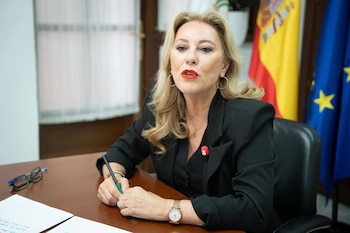
The Minister of Economy, Finance and European Funds, Carolina España, has raised significant concerns regarding the newly established financing arrangement between Catalonia and the Spanish central government. This agreement, often referred to as the “independence quota“, is perceived as a potential threat to the financial well-being of Andalusia, hinting at “millionaire losses” that could impact public services drastically.
In an exclusive interview with Europa Press, España emphasized that this financing model is not just a matter of fiscal policy but an existential concern for Andalusian communities. “The concept of an independence quota has been meticulously crafted by María Jesús Montero, the Finance Minister and PSOE-A General Secretary, against the interests of the broader Spanish populace,” she stated.
Impact on Public Services
According to España, the implications of the “independence quota” are grave. She argues that it translates into direct budget cuts for Andalusia, manifesting in reduced resources for vital services like healthcare, education, and infrastructure development. “Fewer doctors, fewer teachers, diminished spending on dependency care, and less investment in infrastructure—that is the harsh reality we face,” she asserted firmly.
The minister’s highlighted drawbacks of the new financing model echo widespread sentiments across various regions. Socialist leaders in regions like Castilla-La Mancha and Asturias have publicly denounced the Catalan quota, leaving many to question the stance of the Andalusian socialists. “Where do they stand? Will they side with other regions voicing against this financial privilege?” España demanded. This is a pivotal moment for the PSOE-A, as their position could either defend the interests of Andalusia or align with the central government’s favorable treatment toward Catalonia.
Seeking Accountability
The Andalucía government has sent multiple letters to Montero, seeking a dialogue on a new financing system that does not favor any singular community. However, Española expressed her frustration at the lack of a response, which she characterized as a blatant disregard for the need for multilateral discussions on equitable financing.
“After sending several letters, it’s disheartening to see no action on reforming a financing system that should serve all regions equally,” she noted. España’s arguments reflect her former role as the Andalusian counselor of the Treasury, where she previously advocated for a more balanced distribution of economic resources.
A Call for Unity
España’s interview paints a picture not just of political strife but also of a moral responsibility towards inter-territorial solidarity. She warned that failing to address these financial disparities could lead to a fragmented Spain, undermining the very essence of regional cooperation. “This ‘Catalan quota’ is neither fair nor supportive; it’s an affront to the unity of all Spaniards,” she warned.
The Minister of Economy described discussions with various autonomous communities, including some from the PSOE, to strategize against the financial ramifications of the Catalan model. “We will not be complicit in this destructive trend that threatens the cohesion of Spain and the operation of the autonomous community system,” she firmly asserted.
Conclusion
The situation surrounding Catalonia’s singular financing agreement represents more than just a financial issue; it evolves into a broader discussion about equity, governance, and national unity. As Andalucía braces for the potential repercussions, the ongoing dialogue and response from key political players will determine the future of inter-regional cooperation in Spain. The stakes are high, and politicians from all regions must engage constructively to safeguard the collective interests of their communities. The demand for fairness and justice in financing remains at the forefront of Andalusia’s agenda, and the call for a renewed commitment to equitable resource distribution cannot be ignored.