
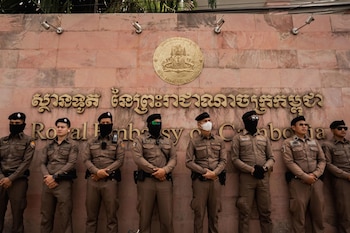
Thailand and Cambodia Reach Historic Agreement to Curb Border Tensions
In a significant development for Southeast Asian diplomacy, Thailand and Cambodia have solidified a landmark agreement aimed at easing escalating border tensions. Signed in Malaysia on Thursday, the pact encompasses 13 critical points aimed at enforcing a “strict” ceasefire along the contested frontier. This diplomatic initiative has been met with applause from high-ranking officials in both countries, who view it as a positive step toward restoring peace and stability in the region.
Context of the Agreement
The agreement comes in response to a series of clashes reported in July between military forces from both nations. As tensions peaked, accusations of border violations and military provocations became rampant, culminating in a call for immediate dialogue to avert further hostilities. Highlighting the urgency, the Thai government released a statement noting that the recent talks sought to “resolve border tensions and restore peace.”
The high-level meeting that led to this agreement was attended by notable defense figures, including Nattaphon Narkphanit, Thailand’s Defense Minister, and Tea Seiha, Cambodia’s Vice President and Minister of Defense. Despite prior allegations of ceasefire violations levied by both parties, the discussions focused on establishing a framework for future cooperation.
Key Elements of the Agreement
The core of the agreement is built around the commitment to cease all forms of aggression. This includes a prohibition on attacks against both civilian and military targets. Furthermore, the parties must refrain from any military patrol movements across the demarcation lines, effectively limiting incursions into each other’s territories.
Additionally, both nations have vowed not to amplify their military infrastructures. According to the agreement, countries are forbidden from constructing or upgrading military fortifications past their established positions. This stipulation is crucial for ensuring that military escalation does not occur, which could lead to renewed conflicts.
Humanitarian Considerations
One of the standout features of the agreement is the moral commitment to treat any captured soldiers with dignity. According to the text shared by the Cambodian newspaper Khmer Times, captured military personnel are to receive necessary medical attention and be repatriated in accordance with international law once hostilities cease.
Moreover, the agreement also addresses humanitarian concerns regarding the return of displaced persons. Both countries have committed to collaborate on the recovery of individuals who might find themselves inadvertently crossing into the other’s territory, again emphasizing the necessity to respect national borders.
Enhanced Communication to Prevent Misunderstandings
To further ensure that misunderstandings do not spiral into confrontations, both countries have agreed to enhance direct communication channels between their military commanders. This will enable timely discussions on border-related issues, mitigating the possibility of misinterpretations or escalation of tensions. Furthermore, the Regional Border Committees (CRF) from both nations plan to reconvene in about two weeks to continue collaborative dialogues.
The Importance of Resolving Border Disputes
The ongoing tensions between Thailand and Cambodia are reflective of broader issues faced by many nations in Southeast Asia, where border disputes often intertwine with national pride, sovereignty, and historical grievances. The culmination of these discussions not only marks a potential shift toward a more peaceful coexistence but also serves as a model for handling regional conflicts.
Involvement from external stakeholders, such as Malaysia, reflects the intricate diplomatic relations prevailing in the area, showcasing efforts for collective peace. The sentiment of unity in resolving outstanding differences is crucial for long-term stability, benefiting not only the countries involved but also the broader Southeast Asian region.
As the world watches this development, the hope is that this agreement will pave the way for further dialogues and foster a more harmonious environment alongside economic cooperation and social stability in the region.
The landscape of Southeast Asian politics is ever-evolving, and as Thailand and Cambodia take these crucial steps towards peace, it marks both a historical moment and a hopeful prospect for future relations.