
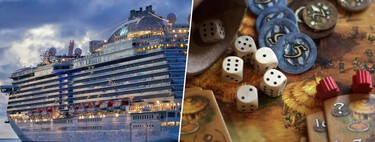
The Rise of the Adora Flora City: A Game Changer in the Cruise Industry
For decades, Europe has dominated the cruise ship construction market, with leading shipyards located in Italy, Germany, France, and Finland. These luxury vessels are not just ships; they are engineering marvels that serve as floating cities. While China has long been a powerhouse in constructing freighters and container vessels, it has recently made significant strides in the cruise industry. The new Adora Flora City represents a seismic shift in this arena and poses a serious challenge to Europe’s longstanding monopoly.
The Adora Flora City: Almost Ready for Action
Recently, the Adora Flora City (or Aida Huacheng in Chinese) exited dry dock in Shanghai, nearing completion. With only test trips and final preparations left on its agenda, reservations for its inaugural cruises from Guangzhou have already opened. Notably, it was assembled in a record nine months, showcasing an impressive pace of production.
This luxury cruise ship, built by Shanghai Waigaoqiao Shipbuilding Co., measures 341 meters in length and 37.2 meters in width, accommodating up to 5,232 passengers in 2,144 cabins. Its design is inspired by the Silk Road and Lingnan culture, featuring floral motifs that pay homage to Guangzhou, which is nicknamed “City of Flowers.”
Why the Adora Flora City Matters
The construction of the Adora Flora City marks a pivotal moment in naval engineering. Building cruise ships is notoriously complex, underscoring the expertise of traditional European shipyards. However, China’s rapid advancements indicate that it is swiftly acquiring the skills necessary to compete at this level.
China’s learning curve has drastically shortened construction timelines while reducing its dependence on foreign technology. This rapidly growing expertise could soon lead to complete self-sufficiency, potentially revolutionizing the global cruise industry.
A Brief History of Adora Cruises
Founded in 2015 through a joint venture between China State Shipbuilding Corporation (CSSC) and Carnival Corporation—historically the world’s largest cruise operator—Adora aimed to combine the resources of Chinese shipbuilding with Carnival’s operational expertise. However, the pandemic disrupted this partnership, leading to Carnival’s full withdrawal.
Despite this setback, Adora has continued to thrive. Early this year, it merged with other state-owned operators under the China Cruises brand to optimize operational efficiencies and strengthen its foothold in the burgeoning Chinese cruise market, making it an entirely Chinese initiative.
The First of Many: Adora Magic City
The Adora Magic City, the first large cruise ship constructed solely in China, laid the groundwork for future projects. Measuring 323 meters and accommodating 5,246 passengers across 14 decks, it was a significant achievement for Chinese engineering. While it took 11 months to assemble, the streamlined process for the Flora City indicates substantial improvements in efficiency.
Greater Independence in Shipbuilding
While the Adora Magic City relied heavily on technical support from the Italian shipyard Fincantieri, the Adora Flora City has marked a crucial step towards Chinese independence in shipbuilding. Although Fincantieri continues to be involved in a limited capacity, the majority of the construction and coordination efforts are now purely Chinese endeavors.
Looking Ahead: The Future of Cruise Ship Manufacturing in China
Recent developments indicate a bright future for China’s cruise industry. A memorandum announced between China Tourism Group and CSSC underscores plans for further advancements, with Shanghai Waigaoqiao Shipbuilding aiming to establish a dedicated cruise ship assembly base. Ambitiously, it plans to unveil the first fully Chinese-built large cruise ship by 2030, setting the stage for a new era in mass production.
With the Adora Flora City and its successors, the shift in the cruise industry is unmistakable. As China climbs the ranks of luxury cruise ship manufacturing, the scales are tipped towards an increasingly competitive global marketplace.