
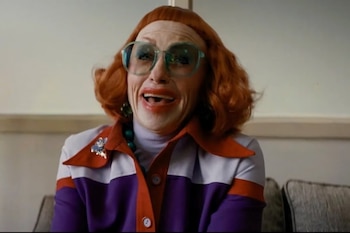
Amy Madigan: A Voice of Dissent in Hollywood’s Memory
An image broadcast live during the 71st edition of the Oscar Awards held in 1999 at the Dorothy Chandler Pavilion still resonates in Hollywood memory. Amy Madigan, the actress now recognized for her role in the horror success Weapons, and her husband Ed Harris, remained serious and silent as the room applauded director Elia Kazan. Madigan has revisited that moment, nearly 25 years later, explaining her motivations with the same firmness she displayed before millions of viewers.
The night Kazan received his Honorary Oscar was anything but unanimous. Introduced by celebrated actors Robert De Niro and Martin Scorsese, the veteran filmmaker took the stage while many famous faces celebrated him. In stark contrast, the restrained gestures of Madigan and Harris became emblematic of a moral and historical dispute that has haunted Hollywood since the postwar period. As shared by Madigan on social media in a recent interview, “There was no possibility that we did. By no means.” Her words, reported by journalist Kyle Buchanan of The New York Times, reveal the personal and political dichotomies surrounding Madigan’s family background. Her father, a journalist and political analyst, lived through the McCarthy era, leaving deep scars that never fully healed.
The Legacy of Elia Kazan: A Controversy Revisited
Elia Kazan’s honor that night sparked fierce divisions, rooted in the 1950s when he testified before the House Un-American Activities Committee and named colleagues he believed were linked to the Communist Party. This act rendered him both a revered figure for his artistic contributions and a controversial one, vilified by many for playing a role in marginalized professionals’ careers.
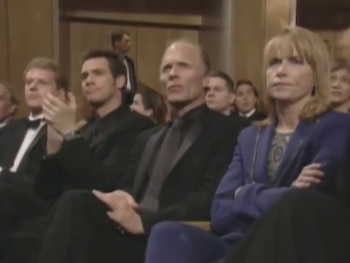
Madigan’s refusal, along with that of Harris, wasn’t an act of indifference; rather, it stemmed from a personal commitment to the memories of that era. “All that brought me back,” Madigan confessed in the same interview. “My father never overcame what he experienced in Capitol Hill. I simply rejected [the applause] and it was a resounding ‘no’.” Her stance, differing from most attendees at the gala, highlighted the stark contrast in the ceremony’s atmosphere, a reminder of the unresolved controversies that still simmer beneath the surface of Hollywood’s glittering facade.
Movies and Memory: The Dialogue Continues
The wounds of that historical period remain painfully open. Kazan, who passed away in 2003, unapologetically claimed, “Do you want to know the truth? Not even the least,” expressing a lack of remorse about his controversial past. Despite receiving numerous accolades for works like East of Eden and Splendor in the Grass, Kazan’s legacy is overshadowed by these divisive decisions.
While the success of Weapons and Madigan’s powerful performance dominate current headlines — having grossed over $150 million in a mere ten days — the questions surrounding memory, forgiveness, and cultural justice continue to loom large over Hollywood. Gestures like those of Madigan and Harris serve as poignant reminders of an enduring debate, transcending generations and echoing through the halls of cinema, every time the past intertwines with the present.
The way Madigan and Harris represented dissent during a celebratory event emphasizes that the conversation about accountability in Hollywood is far from over. Their actions challenge the industry to confront its historical decisions while maintaining the complexity of narrative and character development in storytelling. The legacy of choices made by artists, directors, and the impact they have on society continues to be a pressing dialogue, one that remains crucial to understanding the nuances of modern cinema.