
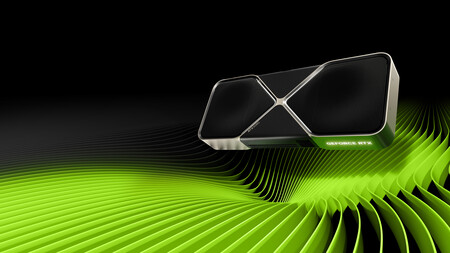
Nvidia is sparking excitement and speculation in the gaming community with its latest GeForce Now announcement, which marks a considerable leap in cloud gaming capabilities. The tech giant is not just aiming to convince gamers that the cloud is the future; instead, it wishes for them to forget that they’re playing in the cloud altogether. This is the essence of the new technological advancements introduced with GeForce Now’s latest update—specifically designed to deliver a gaming experience akin to what one would expect from an actual RTX 5080 , but without any need for that hardware at home.
This announcement is a continuation of Nvidia’s earlier strategy in early 2023 when it launched the RTX 4080 , setting a new bar for cloud gaming quality. With the introduction of the new Blackwell hardware, Nvidia aims for up to a 30% improvement over its previous generation. This new technology supports impressive gaming resolutions, boasting up to 5K at 120 fps , 1440p at 240 fps , and 1080p at a staggering 360 fps . Such enhancements are part of Nvidia’s long-term vision to showcase that remote gaming can not only compete with but may even exceed the performance of local systems.
Nvidia’s ambition goes beyond just enhancing raw power; it’s a revolution in how remote gaming is constructed. The new Superpod does not simply replicate a specific graphics card; instead, it integrates a multitude of components designed to deliver the performance typically linked to an RTX 5080 . This boosted power trajectory involves a combination of the newly architected Blackwell GPUs, ultr-low latency optimized servers , and a robust infrastructure ensuring consistent performance. The ultimate aim is to ensure that this fluid gaming experience relies not on the player’s local hardware but on the extensive capabilities of Nvidia’s data centers.
One of the standout enhancements Nvidia is introducing is what it terms “Cinematic Quality Streaming.” This advanced feature enables more complex textures and preserves detail even in darker areas or intricate elements of a scene—common challenges in the realm of game streaming. This new quality is backed by updates to the coding chain, video delivery processes, and technologies like Rivermax HW Packet Pacing , which optimize data transmission to minimize issues like lag or bandwidth bottlenecks.
Enhancing accessibility, Nvidia emphasizes that the performance leap extends to various devices, including the Steam Deck , where the native app now supports up to 90 fps with the help of RTX 5080 servers. Furthermore, select LG televisions are set to become pioneers in providing 4K at 120 Hz with HDR through the native app, while the brand’s OLED monitors can achieve up to 5K resolution when connected via Windows or MacOS, all without needing any additional hardware.
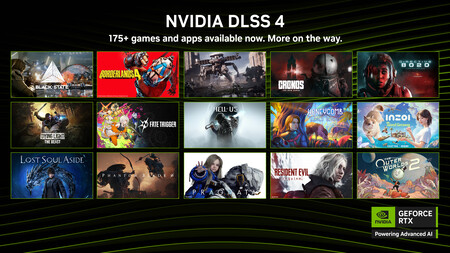
Nvidia also clarified that this GeForce Now update does not merely revolve around the quantity of available titles. While the catalog is set to expand, the emphasis lies squarely on gaming quality. At launch, there will be 20 games optimized for the RTX 5080 configuration , with new optimizations introduced weekly. DLSS 4 and Reflection technologies play crucial roles in transitioning the cloud experience as close to that of a well-tuned local system as possible.
One of the intriguing features is the Install-To-Play option, allowing users to store installation data directly in the cloud. This innovation makes previously inaccessible titles available, effectively doubling the number of compatible games. The library has now surpassed 4,500 titles . Each gaming session provides users with 100 GB of temporary storage. For those wishing to maintain persistent installations, additional storage options will be available at 2.99 euros for 200 GB, 4.99 euros for 500 GB, or 7.99 euros monthly for 1 TB.
The company has confirmed that the rollout of these updates will commence in September, although no specific dates or detailed regional schedule has been provided yet. Notably, Nvidia has decided to maintain the current service rates : the GeForce Now Ultimate subscription will remain at 21.99 euros per month , while the Performance Plan continues at 10.99 euros per month , with daily, monthly, and annual options available upon launch.

With the introduction of the Blackwell architecture , Nvidia positions GeForce Now as a service capable of performing on par with, or even surpassing, localized systems in specific scenarios. The official specification claims 62 Compute Teraflops on Ultimate servers and 48 GB of frame buffer , alongside enhancements that significantly amplify the performance benchmarks set by previous generations. However, realizations of these promises are likely to hinge on external variables, such as server availability and user connection quality.
Images | Nvidia
In Xataka | The most obsessively competitive gamers have found a trick to win their rivals: Give Electric Downloads