
Tension Over the Price of Chinese Cars: A Tilted Playing Field
Rising Concerns
Recently, tensions have emerged among manufacturers and importers regarding the pricing of hybrid and electric cars in the market. The discussion centers around the upcoming tender for hybrid and electric vehicles expected in 2027. Industry stakeholders propose extending the current maximum price of $16,000 FOB or eliminating it altogether. Their primary concern is that this tender, which exempts vehicles from a hefty 35% import tariff, is mostly advantageous to Chinese brands.
Subsidies for Certain Brands
At the heart of this heated debate is the notion that the current system serves as a de facto government subsidy for specific automotive brands, particularly those based in China. Due to their extensive manufacturing capabilities, these companies can price their vehicles significantly lower than their Western counterparts, who struggle to match these numbers.
Importers who benefit from this tariff exemption are largely unconcerned with changes. In contrast, those left out of this quota argue that fair competition is jeopardized. They contend that without the tariff, Chinese vehicles enjoy a level of pricing that simply isn’t attainable for regional manufacturers.
The Unbalanced Competition
Industry executives express frustration over the perception that national cars are overpriced compared to their Chinese counterparts. One executive candidly noted, “I would like to compete with them without tariffs too, because today the court is tilted unfairly.” This sentiment underscores a call for competitive equity in a marketplace perceived as skewed in favor of foreign brands.
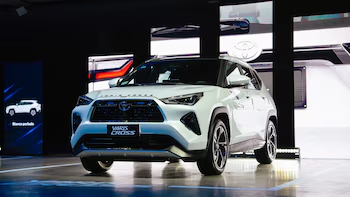
Many consumers express confusion regarding pricing discrepancies; when comparing similar models like the Toyota Yaris Cross and the MG ZS, it’s apparent that the lack of tariffs has tilted consumer preference toward more affordable Chinese options.
Price Analysis: A Closer Look
Let’s delve deeper into specific examples to better understand these price differences. The Toyota Yaris Cross, for instance, retails for roughly $48,457,000 for the base hybrid model, while the MG ZS, another B-segment hybrid, is priced at around $38,500,000—before the 35% tariff is applied.
If we were to impose this tariff on the MG ZS, it would bring its price closer to the Yaris Cross, showcasing how the absence of tariffs significantly influences market dynamics. This discrepancy highlights the challenges faced by local and regional manufacturers unable to compete on such terms.
The Market Landscape
The overall market has also reacted to the shifting dynamics. In 2025, hybrid cars under the current quota may represent about 30% of the competitive segment. With an estimated 190,000 total vehicles sold, the introduction of 40,000 subsidized exceptions complicates the landscape for local manufacturers aiming to maintain their market share.
Discontent Among Auto Executives
Frustration continues to mount among industry leaders. They argue that the governmental policy inherently favors brands that neither manufacture locally nor in neighboring Brazil. Notably, brands like Ford and Chevrolet do benefit, but the overwhelming majority of subsidized vehicles come from Chinese companies.
One executive expressed that if tariffs were applied, the market would see a shift back to familiar brands, with consumers more likely to purchase cars tied to dependable support and warranties. The success of models like the Ford Territory illustrates this point, indicating a preference for established nameplates even among vehicles manufactured offshore.
Conclusion
The contention surrounding the pricing of Chinese cars in the Argentine market underscores a fundamental concern about fairness. As manufacturers push for equal opportunity, the pressing question remains: how will policymakers address these disparities to create a more balanced competitive environment? Only time will tell how this debate will shape the future of the automotive landscape in the region.