
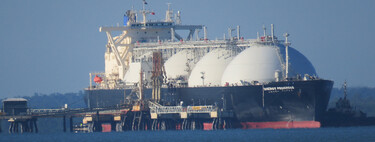
The world woke up today with a dangerous contradiction: while in the aseptic halls of Geneva, the diplomats of the United States and Iran shake hands cautiously, in the waters of the Persian Gulf, speedboats from the Revolutionary Guard are blocking oil tankers. It doesn’t take a missile to fall for the global economy to feel the impact; fear is trading higher and traveling faster than any ship.
Closure of the Strait of Hormuz
The Strait of Hormuz, often referred to as the planet’s energy jugular, has recently undergone a partial and temporary closure for the first time since tensions escalated in January. For consumers, this isn’t just a distant headline: the price of Brent oil has surged by 13% this year alone. This price spike doesn’t stem from an actual lack of supply but rather reflects a geopolitical risk premium. We are paying for what could happen, not what has happened.
According to Iranian state media Euronews, Tehran ordered this partial closure under the guise of “security precautions.” The Iranian Fars news agency, noted by Deutsche Welle, stated that this maneuver is part of military exercises termed “Intelligent Control of the Strait of Hormuz.” This marks an unprecedented move given the current crisis, as it’s the first time Iran has physically closed parts of the waterway since the U.S. administration threatened military action last January.
Operational Impact and Market Reactions
Despite the alarming headlines, it is crucial to clarify that this closure is not indefinite. Jakob Larsen, safety director at Bimco, explained to CNBC that the closure affects incoming traffic and lasts only for “several hours.” Iranian authorities have requested that commercial ships avoid the exercise zone, leading to delays and “minor inconveniences,” but the flow of oil has not completely ceased.
Strategic Significance
To grasp the market’s anxiety, consider the Strait’s strategic relevance. The United States Energy Information Administration (EIA) regards this strait as the most important chokepoint for oil transit globally. Approximately 20 million barrels of crude oil flow through this artery daily, comprising about 20% of global petroleum consumption and nearly 30% of maritime crude oil trade.
Geographically, the strait narrows to just 33 kilometers at its most constricted point, with a navigable route for supertankers only two miles wide in each direction. Any closure, no matter how brief, can create an immediate domino effect impacting global supply chains.
Political Messaging and Future Implications
The timing of this military operation is no coincidence; it serves as a political message. The partial closure occurred during a second round of nuclear talks between Iranian Foreign Minister Abbas Araghchi and U.S. special envoy Steve Witkoff in Geneva. Tehran is strategically using the closure as a negotiating lever while the U.S. increases military pressure in the region.
While diplomatic discussions continue, they are occurring amidst rising tensions. Reports indicate that Araghchi confirmed a “principle of agreement” has been established but cautioned that finalizing the pact could be lengthy. Iran projects strength in the strait while diplomatically extending an olive branch in Switzerland.
The Fear Premium: Economic Consequences
The market’s response has been volatile. Initially, when news of progress in Geneva broke, oil prices fell. However, this trend quickly reversed as traders recalibrated their expectations, leading to a recovery in prices. Market analyst Sugandha Sachdeva highlighted a pervasive “fear premium” as the concern over potential supply disruptions looms large. Even though most oil that passes through the Strait goes to Asia, fluctuations in supply can affect prices globally.
Dependence on Energy Imports
The implications stretch beyond just oil prices. Europe faces renewed vulnerability; having moved away from Russian dependence, it now relies heavily on liquefied natural gas (LNG) imported by ship. European gas reserves are alarmingly low, and any blockade of the Strait would disrupt not only oil but also critical gas supplies from Qatar, a key provider for the coming winter.
Conclusion: A Fragile Balance
The Strait of Hormuz has evolved into a barometer of global fears. With escalating geopolitical tensions and a 65% chance of military action should talks fail, the situation remains precarious. As fear influences markets, the stakes are high; the impacts of this crisis could reverberate far beyond the Middle East, affecting energy bills across Europe and beyond.