
The Evolution of Taxis: A Shift from Four Seats to Robotaxis
When Tesla unveiled its Cybercab, one striking feature stood out: it only had two seats. This was a significant departure from the long-held notion of taxis as vehicles accommodating four passengers and a driver. The absence of a steering wheel and pedals marked the Cybercab as an anomaly in a crowded field. However, as the landscape of transportation evolves, this design choice warrants a deeper examination.
Rethinking Taxi Architecture
Traditionally, taxis have relied on a familiar design: multiple seats, a driver’s position, and adaptable body styles. These vehicles were built to cater to various needs. Enter the robotaxi—an innovative answer to a more focused question: What do most journeys require?
Recent insights from experts like Lucid’s Marc Winterhoff and Uber’s Andrew Macdonald reveal that over 90% of Uber rides feature just one or two passengers. This statistic underscores the practicality of two-seater robotaxis, although it’s important to note that not every scenario is the same; city specifics and user habits play a role.
Tesla’s Vision for Robotaxi
Tesla aims to position the Cybercab not merely as a conventional vehicle equipped with autonomous technology but as a purpose-built robotaxi designed for a driverless transportation network. This forward-thinking model discards traditional controls, focusing on delivering safe point-to-point travel for two occupants.
Expanding the Concept: Lucid and Verne
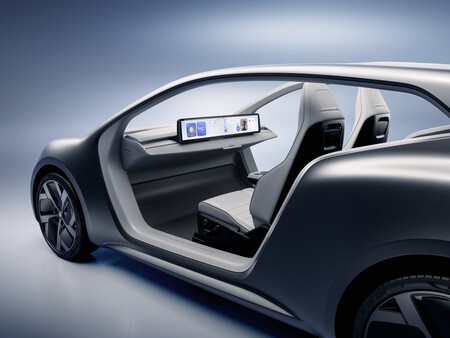
Tesla is not alone in its vision. Lucid’s Lunar robotaxi concept also proposes a two-seater design devoid of controls, highlighting a shift towards smaller, efficient vehicles tailored for urban environments. Croatian company Verne has similarly unveiled plans for a two-seater electric autonomous vehicle, signaling a growing trend in the industry.
Economic and Environmental Benefits
The rationale behind smaller robotaxis isn’t just structural; it carries significant economic implications. Smaller vehicles typically require fewer materials and differentiate themselves through improved energy efficiency. Lucid contemplates that the Lunar could achieve an efficiency of 8.9–9.7 km per kWh, making it an attractive option for fleet operators concerned about operational costs.
Rethinking Urban Mobility
The transformation doesn’t stop at altering vehicle size. A study led by Boesch, Ciari, and Axhausen from ETH Zurich indicates that with increased acceptance of waiting times—up to 10 minutes—a fleet of shared autonomous vehicles could reduce the total number of cars needed by up to 90% in certain situations. This insight reveals that robotaxis could reshape not just our travel habits but the very concept of urban mobility.
The Road Ahead
While the four-seater taxi will likely remain relevant for many needs, the future may necessitate a blend of different vehicle types within fleets. The innovation of robotaxis allows for a more nuanced approach to transportation by tailoring each vehicle to its primary purpose. As we continue to navigate the complexities of modern mobility, it becomes evident that designing for typical usage rather than maximum capacity will be key in creating a sustainable and efficient transport system.
Conclusion
In conclusion, the transition from traditional four-seater taxis to robotaxis illustrates a significant shift in transportation design ethos. With a growing focus on efficiency, economy, and user needs, the future of urban mobility appears poised for revolutionary change.