
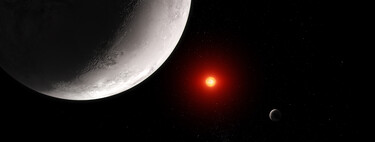
The Discovery of Circumbinary Planets: A New Era in Astronomy
Today, more than 6,000 exoplanets are known to exist, each orbiting around a singular star, similar to our own Sun. However, only 18 planets have been identified within binary systems — systems with two stars — making them exceedingly rare. Tatooine, the fictional planet from the Star Wars universe, is the most renowned of these systems. Recently, though, a team of scientists from the University of New South Wales has revolutionized the search for these elusive circumbinary planets, identifying 27 new candidates that orbit around dual suns.
An Underused Method: Apsidal Precession
The scientist team utilized a technique called apsidal precession, which had previously been employed to characterize binary star systems but had not been applied to search for orbiting planets. This method detects changes in the previously established eclipse schedules of two stars. When these changes cannot be accounted for by general relativity or stellar physics, they suggest the potential presence of celestial bodies — namely, planets — that may be disturbing the stellar movements.
The scientists successfully identified candidates for 27 circumbinary planets using data from the TESS (Transiting Exoplanet Survey Satellite) telescope. However, confirmations are still pending regarding which of these candidates are indeed planets.
Eclipses and Stellar Interruptions
Eclipses occur when one star obstructs the light of another from the viewpoint of an observing telescope. In known binary systems, these eclipses follow predictable patterns. When something unexpected occurs, it may indicate the presence of an obscuring planet. Traditionally, the TESS telescope utilized the transit method for detecting exoplanets, focusing on periodic disturbances in the brightness of a star — disturbances that might indicate a planet passing in front of it.
However, some planets have irregular orbits not aligned with the telescope’s line of sight and thus could easily be overlooked. The new method sidesteps this issue, focusing on gravitational effects that influence the two stars, rendering the visibility of the planet’s orbit irrelevant.
The Implications of the Findings
The researchers have found 27 possible circumbinary planets within a sample of 1,590 binary star systems, suggesting that up to 2% of these systems could possess planets. If this hypothesis holds true, the number of detectable exoplanets could soon skyrocket, rendering previous detection methods significantly biased.
A Rich Tapestry of Planets
Among the newly identified candidates, the smallest potential circumbinary planet has a mass similar to that of Neptune, while the largest could be up to ten times more massive than Jupiter. These distances vary significantly, with the closest candidate being 650 light years away, and the furthest at an astonishing 18,000 light years. This wide variety of potential planets reinforces the notion that many more unseen worlds exist in our galaxy.
The Next Steps for Verification
Moving forward, verifying which candidates are actual planets is crucial. Some stellar phenomena, like brown dwarfs or white dwarfs, could also influence the eclipse calendar, and even black holes might be implicated. Therefore, additional observations will be made using the Anglo-Australian telescope in Coonabarabran to identify these massive objects. If no viable explanation is found aside from planet-induced effects, the candidates can be confidently classified as planets.
Expanding Our Understanding of Planetary Formation
The ability to detect a different class of exoplanets enriches our understanding of planetary formation. It opens up the possibility of discovering Earth-like planets that could exist in the unique conditions of a binary star environment. Some of these worlds may even harbor life or have done so in the past. Since nearly half the stars in the universe are part of binary or multi-star systems, the discoveries turn the spotlight on an expansive and largely unexplored cosmic frontier.