
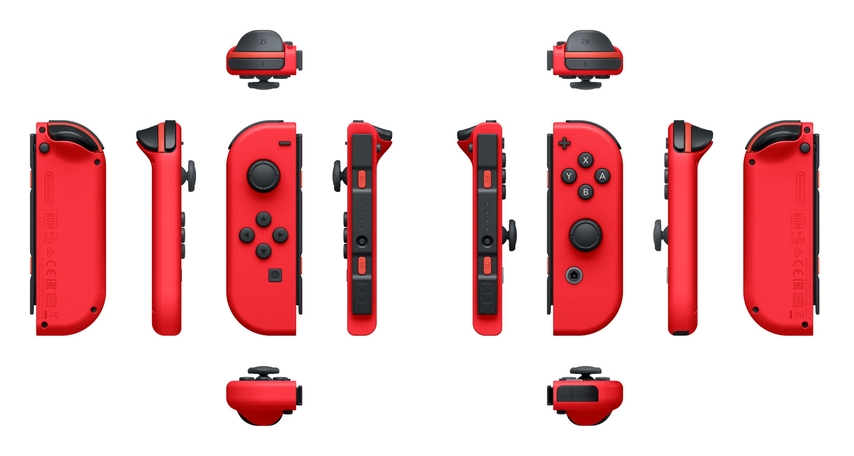
Understanding the Joy-Con Drift Issue: A Closer Look at Nintendo’s Design Flaws
Since the launch of the Nintendo Switch, players have lauded its versatility and innovative design. However, the emergence of the Joy-Con Drift phenomenon has brought significant backlash against the company. Joy-Con Drift refers to the unwanted movement of the Switch’s analog sticks, which can significantly hinder gameplay and overall user experience. This article will delve into the history of the problem, its impact on consumers, and Nintendo’s recent efforts to remedy the situation.
The Origins of Joy-Con Drift
The Joy-Con Drift issue first gained attention soon after the Switch’s release in 2017. Players began reporting that the analog sticks would register movements even when they were not being touched. This irregular behavior made popular games unplayable, frustrating many users. Reports continued to mount globally, prompting players to seek recourse.
In response, Nintendo announced a program to repair Joy-Con controllers for free, irrespective of warranty status. While this gesture was appreciated, the lack of a substantive redesign of the components led many to question Nintendo’s genuine commitment to resolving the structural issues that resulted in drift.
A Legal Battle Brewing
As complaints grew, legal actions followed. Consumer rights organizations began to take notice, leading to several lawsuits in the United States concerning the durability of the Joy-Con. A notable claim argued that the issue represented planned obsolescence, suggesting that Nintendo intentionally designed the controllers to fail, forcing consumers to replace them.
Moreover, regulatory bodies in Europe took serious notice, with over 25,000 complaints filed with the Bureau Européen des Unions de Consommateurs (BEUC). This culminated in a call for stricter regulations on product durability and consumer rights, placing additional pressure on Nintendo.
The Anticipated Launch of the Switch 2
With speculations about a new model, dubbed Switch 2, consumers were hopeful that Nintendo would address the design flaws of the original Joy-Con. Scheduled for release on June 5, 2025, this new console was seen as a turning point. Many believed it would be Nintendo’s opportunity to rectify past mistakes by offering a more reliable and durable gaming experience.
However, players were met with mixed reactions following a teardown analysis by iFixit, a trusted authority on device disassembly. Upon examining the new Joy-Con, iFixit discovered that it featured a stick design that was nearly identical to the 2017 model. This led to immediate concerns about whether the Joy-Con Drift issue would persist in the next generation of gaming hardware.
A Closer Look at the Teardown Analysis
The teardown of the new Joy-Con revealed several alarming insights. Although Nintendo had hinted at integrating newer technologies, such as Hall Effect sensors to mitigate drift by eliminating physical contact wear, the teardown indicated otherwise. iFixit flagged that these sensors were incompatible with the magnetic attachment system employed in the new design.
Additionally, Tunnel Magneto-Resistance (TMR) technology—a potential solution to the drift issue—was also missing from the new controllers. Experts observed that the overall complexity of the Joy-Con had increased, affecting their reparability. The ease of accessing their innards had decreased from a score of 4/10 to 3/10, raising further concerns about user-friendliness and sustainability.
The Broader Implications of Design Choices
Nintendo’s design choices for the Switch 2 not only affect individual players but also raise questions about the broader industry practices concerning product reparability. The company’s decision to use components that are soldered together limits consumers’ ability to repair or replace parts, trapping them in an ecosystem that prioritizes profits over user satisfaction.
As repair advocacy movements gain traction, Nintendo risks falling behind industry standards that increasingly favor consumer rights and sustainability. The emphasis on reducing electronic waste and promoting reparability aligns with emerging legal and ethical standards globally, compelling companies to design products with a lifespan in mind.
The repeated issues with Joy-Con Drift and the lack of a permanent solution indicative of deeper design flaws could lead to renewed scrutiny from consumer rights groups and legal entities. As consumers demand more accountability, Nintendo must navigate these waters carefully to maintain its reputation and consumer trust.
Horrible épée de Damoclès pesant sur les joueurs de Nintendo Switch 1 (et sur les usagers de sticks analogiques au sens large), le Joy-Con Drift entraîne un déplacement fantôme du stick analogique, rendant injouables la plupart des jeux. Depuis 2021, plus de 25 000 signalements européens ont conduit le BEUC (Bureau européen des unions de consommateurs) à saisir Bruxelles pour obsolescence programmée, tandis que plusieurs class actions américaines estimaient le préjudice à plusieurs millions de dollars. Nintendo avait répliqué par des réparations gratuites « à vie », mais sans revoir le design fondamental. L’arrivée de la Switch 2, commercialisée le 5 juin 2025, était donc perçue comme l’examen final d’une promesse industrielle : réparer le passé pour rassurer l’avenir. Et Big N avait soigneusement évité le sujet..
As Nintendo gears up for the launch of its new console, the gaming community is left wondering: will history repeat itself, or will Nintendo deliver a truly improved gaming experience? Only time will tell, but consumers are certainly more vigilant now than ever before.