
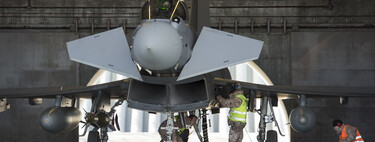
Sweden’s Ambitious Fighter Program: The “Plane of Airplanes”
With Swedish intelligence warning that the Ukraine-Russia conflict may expand across Europe next year, Sweden is proactively transforming its defense capabilities. Recently, the nation signed a contract to develop a revolutionary “plane of airplanes,” which aims to redefine air combat across the continent.
The Contract with Saab
The Swedish government has awarded Saab a contract worth $282 million to spearhead the Koncept för Framtida Stridsflyg (KFS, Concept for Future Combat Aviation) program. This initiative is designed to rejuvenate Sweden’s air combat capabilities, setting a roadmap for the long-term modernization of its fleet. The project, initiated in March 2024, is currently in its developmental and initial demonstration phase.
Strategic Context
Geographically, Sweden’s air defense has always been critical. Despite its neutrality during the Cold War, the proximity of the USSR made national sovereignty a priority. This historical context frames Sweden’s contemporary role in air defense, particularly as global tensions rise and questions regarding Europe’s ability to defend itself become increasingly pertinent.
Importance of the Program
The KFS program holds significant technological and geopolitical implications:
- The program is not just an aircraft but a groundbreaking concept that could reshape combat aviation standards.
- It emerges from urgent security concerns, notably highlighted by intelligence reports and Sweden’s recent NATO membership.
- Success would strengthen Sweden’s aeronautical defense industry, reinforcing its commitment to military technological sovereignty.
- If successful, it would be Europe’s third new-generation fighter program, alongside France-Germany-Spain’s FCAS and UK-Italy-Japan’s GCAP, raising interoperability questions among these different initiatives.
Instead of a traditional fighter jet, Sweden is conceptualizing a distributed combat system. This intricate design involves fragmented functionalities across various specialized platforms, all coordinated in real-time through advanced artificial intelligence.
Referred to informally as the “plane of airplanes,” this system primarily represents a sixth-generation “system of systems.” It involves a manned aircraft overseeing a network of specialized drones, managed by centralized AI.
Risks and Challenges
Sweden’s undertaking is ambitious, and Saab faces significant challenges. The company has previously tested its Helsing Centaur AI on the Gripen E, attempting to enhance tactical decision-making capabilities in combat scenarios. However, Sweden has yet to develop a full-sized stealth fighter, having previously focused on smaller research drones.
While initial tests of the AI have shown promise, they have yet to validate the technology’s efficacy in real combat conditions. Given the complexity and financial demands of the KFS project and the long development timeline, Sweden must navigate the risk of being overwhelmed as a medium-sized nation pursuing such an expansive military innovation.
In conclusion, Sweden’s “plane of airplanes” signifies a pivotal shift in combat aviation, driven by pressing geopolitical realities and the need for advanced air defense capabilities. As Europe confronts a future fraught with uncertainty, these developments underscore the importance of national and collective defense readiness.