
The Surprising Demographics of Slaves in Roman Hispania
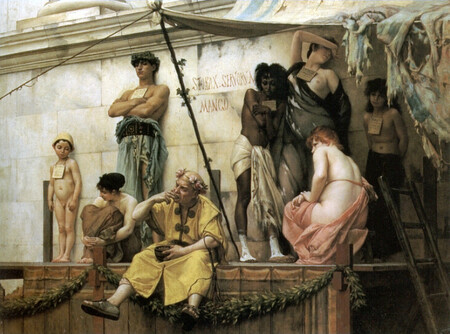
We’ve seen them in movies, novels, documentaries, and museums, but there’s one detail about Roman slaves that’s often overlooked: their demographics. A recent analysis by Spanish historian Fernando Blanco Robles reveals that, at least during the High Empire, slaves represented about 9% of the population in Roman Hispania. This figure is significantly lower than commonly held beliefs, opening a new dialogue on the realities of slavery in ancient times.
Understanding the Statistical Landscape
In an article published in the January issue of Lucentum, Blanco explores the demographic aspects of slavery in Hispania. While much research has focused on the lives of slaves—their daily routines, diets, and origins—less attention has been paid to how many slaves existed in the Roman Empire and specifically in the Iberian Peninsula. This study aims to fill that gap.
Historical Context and Population Estimates
Throughout history, estimates of the slave population in the Roman Empire have varied widely. Some 19th-century estimates suggested that 30% of the population of Roman Italy lived in slavery, while more recent analyses have narrowed that figure to between 15% and 25%. Blanco’s examination of recent epigraphic sources and historical data reveals that a plausible figure for the total population of Hispania was between 3.5 and 4 million. Thus, slaves, alongside freedmen, would make up approximately 9% of this population—a significant yet far more modest count than previously thought.
Sources of Information Used in the Study
To arrive at these conclusions, Blanco carefully analyzed inscriptions and historical records from the three main provinces of Hispania: Baetica, Lusitania, and Citerior. Specifically, he examined 653 instances of private service with 466 registrations, many of which contained valuable demographic data, like ages. The results suggest that the ‘dependent’ population, consisting of both slaves and freedmen, was significantly smaller than many earlier estimations.
Life Expectancy and Gender Distribution
The study also sheds light on the life expectancy and gender ratios among slaves in Hispania. Average life expectancy for slaves was around 30 years, aligning closely with the general population. Interestingly, there was a notable gender disparity; males constituted about 64% of the slave population, while females accounted for only 36%. This aligns with patterns observed in other parts of the Empire as well.
The Path to Enslavement
Understanding how individuals became enslaved is crucial for grasping the full scope of this historical reality. Various avenues led to enslavement: being a prisoner of war, piracy, abandonment, or even financial desperation, where a person might sell themselves into slavery to escape debt. The channels of slavery were diverse and varied depending on the geographical context, complicating any singular narrative about how individuals found themselves in servitude.
Conclusion
Blanco’s research into the demographics of Roman slaves in Hispania challenges long-held assumptions and provides a nuanced view of this critical aspect of ancient societies. By analyzing statistical data alongside historical records, he not only raises awareness but also invites further investigation into the complexities surrounding slavery in ancient Rome.