
Background of the Incident
A federal court in Argentina recently ruled against an international airline regarding a significant breach of contract during a return trip from Aruba to Buenos Aires. Two passengers found themselves stranded for over 17 hours without food or extra clothing after their flight was delayed and ultimately canceled.
Details of the Flight Cancellation
The passengers had purchased tickets for a flight with a scheduled stopover in Panama. They checked in on time and boarded their plane at Aruba’s international airport on February 1, 2021. However, they faced nearly three hours of waiting without any information before being informed that a technical fault had led to the flight’s cancellation, leaving them unable to catch their connection to Buenos Aires.
Passenger Experience and Inconveniences
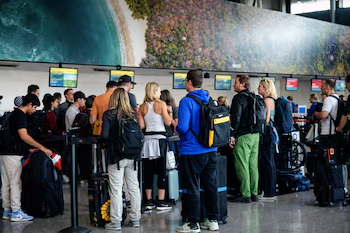
The immediate consequence of the cancellation was devastating for the passengers. They had to wait in the airport overnight, wearing the same clothes as a result of their luggage being checked in. Despite their predicament, the airline failed to offer any meaningful support, such as explanations, alternative travel arrangements, or essential services like food and drink during their lengthy wait.
Legal Proceedings and Court Ruling
The two claimants subsequently filed a lawsuit against the airline, seeking compensation based on their objective contractual liability under international air transport laws and the Argentine Civil Code. Their claim sought $308,000 plus interest and costs.
Judge’s Assessment
The Federal National Civil and Commercial Court No. 11 reviewed the case and found the airline responsible for the unfortunate incident. The court highlighted that international air transportation regulations, specifically the Montreal Convention, impose strict liability on carriers for any disruptions unless they can prove exceptional circumstances.
The airline’s lack of evidence justifying the delay or cancellation only strengthened the passengers’ claims, ultimately leading to a court-ordered compensation package of $2,500,000 to cover both moral and material damages.
Compensation Breakdown
The awarded amount included $100,000 for material expenses incurred during the ordeal, while moral damages were assessed at $1,200,000 for each plaintiff. The court emphasized the emotional and psychological distress that resulted from the airline’s negligence.
Implications for the Airline Industry
This case serves as a stark reminder of the obligations airlines have toward their passengers. Adequate communication and care during unforeseen delays are not just good practice but are legally mandated responsibilities. The ruling also underscores the potential financial repercussions for airlines failing to manage such situations properly.
Conclusion
The airline’s failure to meet its contractual obligations led to significant financial penalties, reflecting the judiciary’s commitment to protecting consumer rights in the airline industry. Passengers, in this case, received recognition for their severe inconvenience and distress, paving the way for increased accountability across the sector.