
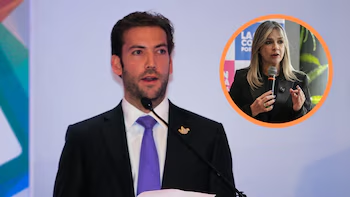
Strong Grip: The Clash Between Martín Santos and Vicky Dávila
Martín Santos, the eldest son of former Colombian President Juan Manuel Santos, recently engaged in a heated exchange with journalist Vicky Dávila over her return to journalism. This digital confrontation has sparked debates not only about the ethics of journalism but also about personal legacies and familial ties in Colombia.
The Background of the Conflict
Martín Santos publicly criticized Vicky Dávila’s return to journalism, suggesting that her actions are nothing more than a personal vendetta rather than professional journalism. He claimed that both he and his family have been “harassed” by Dávila for years, asserting that she does not practice legitimate journalism but is rather driven by “personal whim.”
In the social media battle, Dávila didn’t hold back. She countered Santos’s points by questioning his life accomplishments, insinuating that he enjoys “the joys of power and money” due to his father’s legacy. Dávila’s criticisms reflect a larger narrative of accountability in Colombian politics.
Vicky Dávila’s Accusations
Dávila’s fierce rebuttal included allegations against former President Santos, suggesting that he handed the country over to the FARC (Revolutionary Armed Forces of Colombia) and is fundamentally responsible for Colombia’s current “disaster.” She reminded him of the Odebrecht scandal, framing his administration as one that brought harm rather than benefit to the nation.
Martín Santos’s Retort
Martín Santos responded to Dávila’s allegations by asserting that her credibility has been “ruined.” He framed her critiques as defamation, expressing that Dávila has consistently relied on sensationalism rather than factual reporting. This back-and-forth culminated in accusations that both parties struggle with maintaining moral high ground amidst political mudslinging.
The Personal Dimension
The personal stakes in this public feud are high. Dávila stressed the importance of self-made success, challenging Santos to contemplate his identity outside of his father’s accomplishments. Her statements reflect a broader critique of privilege and the implications of family in establishing one’s professional identity.
Dávila declared, “Dedicate yourself to having your own life,” pushing back against what she sees as dependency on familial reputation.
The Future of Colombian Journalism
As this conflict unfolds, it raises important questions about the future of journalism in Colombia. The exchange highlights a growing concern over the role of the media in political discourse, as journalists like Dávila seek to hold those in power accountable.
Dávila affirmed her commitment to truth over approval from any politician, emphasizing the power of public opinion over established legacies.
Conclusion
The clash between Martín Santos and Vicky Dávila represents more than just a personal feud; it embodies the complex intersection of politics, family legacies, and media ethics in Colombia. The outcome of their confrontation may have lasting implications not just for their personal identities but also for the broader landscape of Colombian journalism and political accountability.