
The Tobacco Landscape in Spain: A Focus on Extremadura
Declining Trends in Tobacco Cultivation
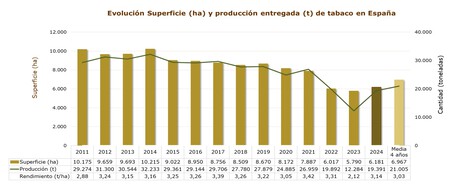
Tobacco cultivation in the European Union has experienced a significant downturn over the past few decades. In the early 1990s, around 400,000 tons of tobacco were harvested, but by the end of the last decade, this number dropped drastically to 140,000 tons. Spain mirrors this worrisome trend. In 2024, production levels and cultivated hectares were notably lower than they were a decade ago. Despite this decline, one region in Spain remains a stalwart in the tobacco sector: Extremadura.
Extremadura’s Dominance in Tobacco Production
Extremadura is the powerhouse of tobacco farming in Spain, accounting for an overwhelming 99% of the country’s total tobacco crop and its processing. This concentration translates into a substantial economic impact—approximately €126 million. The tobacco industry’s importance is emphasized by a recent report from AFI, revealing that the cultivation and initial processing in Extremadura generate €69 million in added value, representing nearly the entire national total.
Employment and Economic Contributions
The Tobacco Roundtable estimates that the sector supports hundreds of jobs in Extremadura, with over 1,000 direct positions and around 2,000 full-time contracts when considering indirect and induced employment. Extremadura is recognized as not only Spain’s leading tobacco-producing region but also a significant player at the European level.
Overview of the Sector
According to the 2020 Agrarian Census, Extremadura encompasses 94% of the 1,052 farms dedicated to tobacco cultivation in Spain. The northern province of Cáceres hosts the majority of these tobacco farms, particularly in areas like Campo Arañuelo, La Vera, Alagón, Talayuela, and Navalmoral de la Mata.
Comparisons with Other Regions
While Extremadura dominates the tobacco landscape, other regions like Castilla y León, Castilla-La Mancha, and Navarra also participate, albeit on a much smaller scale. In 2024, Extremadura allocated 6,121 hectares for tobacco cultivation compared to just 19 hectares in Castilla y León, 18 hectares in Castilla-La Mancha, and a mere 3 hectares in Navarra.
Broader Tobacco Industry Context in Spain
The Tobacco Table reports that the entire sector contributes about €1.825 billion to the national GDP, with potential impacts exceeding €3.7 billion. Tobacco taxes contribute significantly to the state revenue, collecting an estimated €6.7 billion from taxes on tobacco products.
Spain’s Position in the Global Market
Although Extremadura plays a crucial role in Spain’s tobacco production, Spain accounts for only 0.5% of global tobacco production. Interestingly, the country’s contribution represents about 19% of the European Union’s total output. However, when measured by area, Spain ranks 36th globally in tobacco production, far behind leading nations like China and India.
The Future of Tobacco in Extremadura
Despite the challenges faced by the tobacco industry, including declining consumption and strict regulatory measures, Extremadura continues to export approximately 74% of its tobacco leaf production. The region remains determined to adapt within an evolving agricultural landscape. As external pressures on tobacco consumption rise, Extremadura’s robust infrastructure will be key to sustaining its status in the sector.
Conclusion
Extremadura stands as a significant player in Spain’s tobacco industry, contributing extensively to both the national economy and employment. However, the challenges of global competition and declining consumption demand innovation and adaptation in this storied agricultural sector. As conditions evolve, the resilience and focus on sustainability will be essential to maintaining Extremadura’s prominent position in tobacco cultivation.