
OPPO’s Strategic Shift: A Consolidation of Sub-Brands
A few days ago, OPPO made an official announcement regarding its strategic alignment, bringing Realme under its umbrella while merging with OnePlus. This move signifies a shift from independent operations to a more organized structure where both Realme and OnePlus operate as sub-brands.
The Landscape of Mobile Brands
At the beginning of this decade, the mobile industry witnessed a wave of separations, such as the forced division of Honor and Huawei, and the independence of POCO from Xiaomi. However, as we navigate through the 2020s, there’s a noticeable trend of collaboration among brands. This is particularly highlighted by OPPO’s recent decision, echoing movements seen in other major companies.
The Importance of This Merger
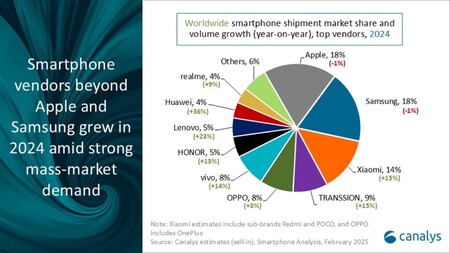
According to CounterPoint data, OPPO currently ranks as the fifth best-selling mobile brand globally. In 2024, along with OnePlus, it held an 8% share of the global market, suggesting a strong positioning in the competitive landscape. The merger brings both teams together to share resources, aiming to cut costs while continuing to innovate independently.
As illustrated in recent data, this consolidation will likely see OPPO’s market share increase at the expense of Realme’s. By pooling resources, OPPO, Realme, and OnePlus can present a more unified and innovative product line, allowing for improved customer service and competitive pricing in an increasingly saturated market.
Context of Market Competition
As OPPO enhances its market share, it draws closer to competitors like Apple, Samsung, and Xiaomi. The mobile industry is becoming increasingly brutal, especially as manufacturers vie for attention in a sector with diminishing profit margins. With rising RAM prices and tightening supply chains, the agility gained through this merger might be crucial for survival.
Xiaomi has previously integrated its brands (like POCO) into its main structure to streamline operations. OPPO appears to be taking a similar route by differentiating its sub-brands into premium, cost-efficient, and feature-focused categories.
Future Directions for OPPO
This strategic merger positions OPPO to differentiate its offerings effectively. It’s anticipated that OPPO will push premium devices, while Realme will maintain a reputation for value-for-money products, and OnePlus could evolve into a “flagship killer” brand with distinctive features.
Conclusion: The Implications of Increased Collaboration
In the intricate ecosystem of Chinese smartphone manufacturers, BBK Electronics stands out as a powerhouse controlling brands like OPPO, Vivo, OnePlus, Realme, and iQOO. Although these brands have operated with distinct marketing strategies, they share production and R&D processes. This latest strategic shift not only indicates a move towards consolidation but also reflects the enduring trend of collaboration in a market that continues to evolve.
By unifying their structures, OPPO, Realme, and OnePlus pave the way for greater innovation and enhanced customer loyalty, crucial for thriving in the competitive landscape of mobile technology.