
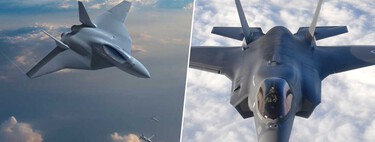
The FCAS: Europe’s Ambitious Fighter Jet Project
Since the end of the Cold War, Europe has attempted to establish joint military programs to rival those of the United States. However, these efforts often clash with national interests, diverse industrial cultures, and the technological egos entrenched within each nation. This trend continues with the ambitious Future Combat Air System (FCAS) devised by France, Germany, and Spain.
A Hopeful Start
The FCAS was conceived as a high-caliber strategic initiative aimed at gaining technological superiority over the U.S., particularly in light of the F-35’s omnipresence in modern military discussions. The €100 billion project initially promised to reduce Europe’s reliance on American fighter jets, particularly the F-35, making significant strides toward a more independent European defense framework.
The Role of Dassault Aviation
While the collaboration involves multiple nations, the real impediment stems from one major player—Dassault Aviation. This French firm has a legacy of prioritizing its control over military aircraft development. Historical decisions, such as abandoning the Eurofighter project in the 1980s, illustrate Dassault’s tendency to prioritize national interests over collaborative advancements.
The stakes surrounding the FCAS are immense. The complications arise not just from industrial disputes but from the distribution of power within the project. As France seeks to ensure that its fighter jet remains a lighter and more naval-capable model, Germany shows a preference for a heavier and more versatile option. Yet, at the heart of these disagreements lies a deeper struggle: the battle for leadership in what should be a cooperative venture.
Challenges in Collaboration
The FCAS was designed to be an integrated combat system, featuring manned fighters, drone swarms, and advanced weaponry, led primarily by Dassault for aircraft systems and Airbus for aeronautics. Unfortunately, disputes over specifications and governance control have derailed the collaborative spirit, with each nation asserting conflicting claims over technological direction.
Despite outward appearances, French influence over Dassault is limited. While the French state remains the principal client, the firm has survived nationalization attempts and governmental pressures for decades, allowing it to maintain independence.
Spain’s Dilemma
Spain initially joined the FCAS with high hopes for technological autonomy, effectively sidelining the American F-35. However, if the FCAS falters, as current indications suggest, Spain may find itself reverting back to American aircraft, particularly the F-35—a scenario laden with irony, as the fault would not lie with Washington but rather with an ally.
The Uncertain Future
Germany is already hinting at possibly pursuing its path amid the challenges of the FCAS project, which could lead to further fragmentation in European defense collaboration. This could prove detrimental for Spain, as it risks losing years invested in the FCAS project while being coerced back to American suppliers under less favorable terms.
The FCAS represents Europe’s ambitions in defense and technological independence, but as it stands now, the project serves as a testament to the struggles of collaborative efforts. The old Atlantic balance is coming back into play, driven not by a lack of ambition but by excessive control and the inability to harmonize competing national interests.
Image | José Luis Celada Euba