
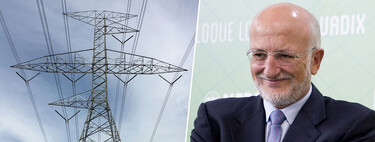
The Geopolitical Context of Macron’s Comments
In a recent joint interview with major European newspapers, French President Emmanuel Macron has stirred the pot by critiquing Spain’s energy model. Describing the debate over energy interconnections as “false,” Macron seems less concerned with technicalities and more driven by a geopolitical tension. His stance appears to be a defensive posture for France’s nuclear power, which is increasingly threatened by the cost-effective solar energy produced by Spain.
Direct Accusations Against Spain
Macron’s remarks reflected a clear assertion: “Spain’s problem is that it has a 100% renewable model that its own domestic network does not support.” He argued that recent Spanish blackouts were due not to interconnections but to the inherent instability of renewable energy. By making these statements, the French president seems to be leveraging external anxieties—from geopolitical crises to financial dependencies—to bolster France’s own energy narrative while promoting the concept of Eurobonds for economic survival.
The Economic Imperative for Nuclear Power
At the heart of Macron’s defense lies France’s ambitious €300 billion nuclear investment plan, which is essential for the country’s economic viability. France aims to remain the “battery of Europe,” a goal that could be jeopardized if Spain continues to flood the markets with cheaper solar energy. Consequently, Macron has sought alliances, such as his pact with German Chancellor Friedrich Merz to classify “pink hydrogen” (a product of nuclear energy) as green, thus creating a buffer against the aggressive solar boom from the south.
The Interconnection Challenge
Despite Macron’s proclamations, data indicates that Spain remains an “energy island” with a meager 2.8% interconnection capacity—far below the EU’s recommended 15%. Essential interconnection projects in regions like Aragon and Navarra have been excluded from France’s 2025-2035 network plans, illustrating an unwillingness to cooperate that undermines the European energy landscape.
The Lessons from Denmark
The rhetoric surrounding “renewable instability” collapses when considering examples from northern Europe, particularly Denmark. With over 80% of its power generated from wind, Denmark maintains resilience against blackouts due to its ultraconnected grid, instantly balancing its load with countries like Germany and Norway. In contrast, France’s nuclear power is faltering, particularly evident during last summer’s river heatwaves that forced reactor shutdowns while Spanish solar farms continued operating effectively.
Consequences of Solar Asphyxiation
The fallout from France’s restrictive energy policies has repercussions for Spain. Due to their limited interconnections, Spain has been forced to curtail approximately 7% of its clean energy—a waste that depresses market prices and discourages investment. While Macron calls for a “European awakening” to avoid dependency on powers like China or the U.S., his actions effectively position the Iberian Peninsula as an energy vassal of France, contradicting the strategic autonomy he purports to champion.
Conclusion: The Path Forward
As Europe grapples with the dual priorities of energy security and sustainability, France must reconsider its approach to cooperation with its neighbors. Protecting nuclear power at all costs may not be a sustainable long-term strategy; instead, embracing interconnection and collaboration could yield more benefits for the entire continent. The conversation surrounding energy must move beyond political posturing and towards cooperative solutions that recognize the diverse strengths of each nation involved.