
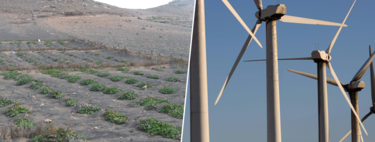
The Urgency for Spain’s Marine Wind Development
The industry is growing increasingly impatient . Almost a year has passed since the approval of Royal Decree 962/2024, intended to facilitate the development of marine wind energy in Spain. Yet, the crucial ministerial order regulating the first auction remains absent, and no official timeline detailing subsequent steps has been released. In a sector that moves as swiftly as the wind , this inaction is becoming a significant concern.
A Call to Action. Both the Wind Business Association (AEE) and the Marine Wind Forum have united to convey a critical message to the government: investments are at risk of relocating to other countries. In a joint statement, they demanded the immediate release of auction guidelines and a long-term plan that provides clarity. While Spain continues to lag, neighboring nations like Portugal , France , and Morocco are progressing with defined models and concrete projects.
Potential Losses. According to AEE, the failure to advance could affect the creation of over 7,500 jobs in coastal regions and negate contributions exceeding €2 billion annually to Spain’s GDP. Furthermore, the chance for Spain to remain a leader in floating wind technology—where it has pioneered prominent prototypes—might vanish if a stable local market is not established.
Spain possesses suitable industrial capabilities , well-equipped port infrastructure, and a proven technological background as the first developer of a floating prototype. It also has identified areas designated for maritime development. However, without a local market that can ensure volume and sustainability, these advantages risk remaining untapped.
<img alt="Innovation in Wind Energy" width="375" height="142" src="https://i.blogs.es/da58db/ps---plantilla-portadas-xtk/375_142.png"/>Continuous Delays. Earlier this year, Minister for Ecological Transition Sara Aagesen announced that the government plans to initiate the first marine wind auction in 2025 and that an order detailing the auction bases would be published shortly. This commitment aligns with the goal of achieving an installed capacity of 3 GW by 2030 , as outlined by the National Integrated Energy and Climate Plan (PNIEC). Yet, today, the auction order remains unpublicized, marking a significant hurdle in the timeline.
Investments at Risk. The main obstacle is the absence of concrete signs and a structured roadmap for development. This has begun to pressure various companies—as highlighted by AEE—to start diverting their investments away from Spain towards nations that provide more certainty and speed in their processes. Meanwhile, countries such as Portugal are nearing the definition of their auction models, and France has awarded a significant project in the Mediterranean , while also preparing additional parks in the Bay of Biscay . Morocco , on the other hand, has unveiled a 1,000 MW offshore wind project aimed for 2029.
Currently, Spain has zero commercially operational marine kilowatts. Of the 278 MW of floating wind energy installed globally , none is found in Spain, despite the country being instrumental in producing exported components . Furthermore, the wind sector urges that the Institute for Diversification and Saving Energy (IDAE) pushes to modernize crucial infrastructure at ports like those in A Coruña , Castellón , and Tarragona . Without these logistics hubs being up to par, the entire value chain significantly weakens.
Canary Islands: A Prime Location. The Canary Islands have emerged as an ideal location for initiating pilot auctions. Boasting consistent wind patterns, a solid logistics framework, political and societal consensus, and high electricity generation costs that could be drastically reduced through marine wind, the islands serve as the “logical spearhead” for commercial development of this technology, according to AEE.
Looking Ahead. The sector is eager for the Ministry to expedite the public consultation process for the ministerial order and to establish a straightforward timeline for upcoming auctions. Meanwhile, global markets show no signs of slowing down, with the latest data indicating that the offshore sector expanded by 10% in 2024, reaching 83.2 GW installed .
Spain still has a viable opportunity to secure a leading role in the European floating marine wind landscape. However, the window for action is closing. Announcements alone aren’t sufficient; what is needed are decisive actions, clear regulations, and strong political commitment to stimulate growth in this crucial sector. If the current environment remains unchanged, Spain risks losing its strategic positioning to other nations, potentially resulting in lost investment, jobs, and a critical opportunity to both re-industrialize the economy and to advance toward energy transition goals.
Image | Unsplash