
A Modern Twist on Wartime Deception
During the First World War, the United Kingdom introduced Q-ships: harmless-looking merchant vessels that concealed cannons to lure German submarines into ambushes. This concept of repurposing commercial vessels as weapons is not entirely new, but recent events indicate an evolution that could dramatically change the landscape of maritime warfare.
The Emergence of Drone Incursions
It all started with some drones. By the end of 2024, drone incursions were documented around several U.S. military bases in England, quickly spreading to strategic locations in Germany. These unidentified drones appeared and vanished without a trace, leading to investigations that have yet to publicly reveal those responsible.
These incursions are not merely a chapter in Europe’s ongoing hybrid warfare; a new report suggests their origin may lie far from the coast.
The Hypothesis: Drones from a Ghost Fleet
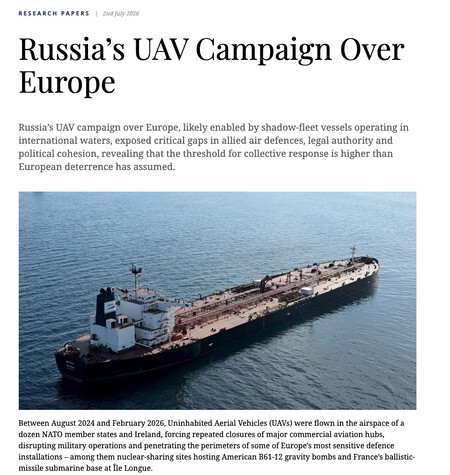
A study from the International Institute for Strategic Studies proposes that it is “highly probable” that Russia utilized its infamous ghost fleet as platforms to launch and recover drones. These vessels, previously associated with transporting oil to circumvent Western sanctions, could also serve a far more sophisticated military function if the hypothesis is corroborated.
Merchant Ships as Aircraft Carriers
A tanker can become an aircraft carrier. According to analysts from TWZ, the unique advantage of a merchant ship lies in its unexpected role as a military platform. These vessels can linger in international waters, stealthily approach the coast, deploy reconnaissance drones, and continue their routes without raising any alarms.
In sharp contrast to an aircraft carrier, which cannot hide its presence, merchant ships provide a perfect cover for operations that are difficult to attribute, posing a new challenge for military intelligence.
The Chosen Targets
The selected bases. Notable targets of these drone operations have included critical installations like RAF Lakenheath, which is being prepared to house U.S. nuclear weapons, along with others like RAF Mildenhall, RAF Fairford, RAF Feltwell, and Germany’s Ramstein airbase.
Researchers noted around 170 citizen reports, of which approximately half were deemed credible based on corroborating witness accounts and images. They also identified coordinated flight patterns that were inconsistent with recreational use.
The Sea: A Launching Pad for Drones
The sea offers an explanation. The report suggests that some drones might have taken off from Russian-affiliated ships situated beyond visual range of the coast. One possibility is the Orlan-10, a military drone capable of extensive autonomy, equipped with intelligence, surveillance, reconnaissance, and even electronic warfare features.
The authors of the report acknowledge that using an identifiable military model could increase risks of attribution, so they do not discount the possibility of employing modified commercial drones to obscure their origin further.
Implications for Hybrid Warfare
The boss worries. It is important to note that the report’s conclusions are based on clues, capabilities, and circumstantial evidence rather than irrefutable proof. No European government has officially tied specific ships to any incursions, although calls for investigations have been growing.
The British Ministry of Defense and the U.S. Air Force in Europe have confirmed the occurrence of drone flights but have remained tight-lipped about intelligence insights regarding their potential authorship.
Conclusion: The Future of Maritime Warfare
If the hypothesis holds true, we may need to reconsider our understanding of the multifaceted roles that merchant ships can play in modern warfare. The potential for these converted vessels to serve not only as transporters of oil but also as clandestine platforms for espionage and reconnaissance significantly complicates geopolitical dynamics. In essence, the most pressing concern might not just be identifying the drone operators but rather recognizing that a basic merchant ship could undertake missions previously reserved for sophisticated military carriers.