
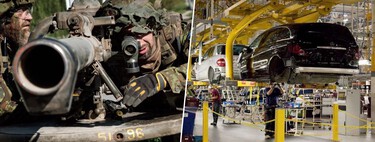
A few months ago, Spain promised to increase its investment in defense to 2% of GDP . According to data from the Industrial and Technological Plan for Security and Defense presented by the Government, this effort involves mobilizing 10,471 million euros by 2025. This move represents a significant step forward in aligning with commitments made to NATO while ensuring that social spending remains untouched and taxes are not increased.
These investments in the defense industry carry the potential to stimulate the national industry, indirectly contributing to the reactivation of factories and companies that have historically excelled in technology and production.
Employment Opportunities : The projections from both the Government and various sectoral employers suggest that 96,000 new jobs will be created in sectors such as aeronautics, robotics, programming, and manufacturing. This change not only implies increased job opportunities but also an investment in continuous training and fresh prospects for the youth entering the labor market.
Highly sought-after specialties include telecommunications engineering, aeronautics, electronics, and cybersecurity. Furthermore, there is a pressing need for specialized roles in weapon manufacturing, such as welding, assembly specialization, and expertise in sheet metal, which can be attained through various vocational training programs.
<img alt="If Europe rearms we will find a problem that will affect us all: cars and trains" width="375" height="142" src="https://i.blogs.es/235bc5/ps---plantilla-portadas-xtk-432/375_142.jpeg"/>Salary Expectations: This rising demand for highly skilled personnel is also reflected in the salaries offered by this sector. According to KPMG data published by *Fifodies*, the average salary for employees in the defense sector is 85% higher than the Spanish average, which is approximately 25,896 euros per year . Consequently, qualified employees in this sector earn about 47,907 euros per year on average.
Most of these well-paid roles can be found in the aeronautical subsector, closely followed by the naval sector, which have seen substantial growth in recent years, collectively accounting for 74.5% of total sector revenue.
A Booming Sector: The defense industry, along with aeronautics and security, is currently experiencing substantial growth, particularly spurred by heightened technological demands due to ongoing conflicts, such as in Ukraine, prompting significant investments in research and development (R&D). This trend necessitates the recruitment of highly qualified personnel. According to data from Aesmide (Association of Contractor Companies with Public Administrations), in 2023, the defense-related sectors achieved a turnover of approximately 13.9 billion euros , of which 1.2 billion euros were attributed to the aerospace sector. This sector allocated 15.5% of its turnover for R&D and innovation.
Within this overall figure, defense and security contributed more than 8,000 million euros , which translated into an impact on employment of 115,000 direct jobs and 95,000 indirect jobs spread across various regions in Spain, primarily centered in Madrid, Andalusia, and the Basque Country .
<img alt="Spain has a big problem with the generational relief of the labor market: 3.5 million young workers are missing" width="375" height="142" src="https://i.blogs.es/745398/gabor-szuhan-kmifs9py528-unsplash/375_142.jpeg"/>Opportunities Beyond Borders: Nevertheless, Spanish companies are not alone in the quest for qualified talent; increased defense spending across Europe has surged by 30% . Consequently, the entire sector across Europe will be engaged in a competitive search for talent. This competition has incentivized educational institutions to develop programs aimed at train new professionals and address the labor demand within this sector in the upcoming years.
Major Companies Respond: The shift towards increased defense investment in Spain is prompting notable companies in the sector, such as Indra and Navantia , to broaden their recruitment efforts to align with the emerging demands. The steel sector, critical for the production and maintenance of military equipment, is also expecting a surge in job creation due to increasing production needs.
In July, Indra announced plans to recruit 2,400 new employees within its defense divisions, with 65% of those positions targeting experienced professionals while the remaining 35% would be reserved for young talent . Similarly, Navantia has begun to onboard new personnel, offering 45 new vacancies at its Puerto Real facility in Cádiz in response to a rise in orders for new army patrol vessels.
Image | Unspash (Evgeny Opananko, Anfal Shamsudeen)