
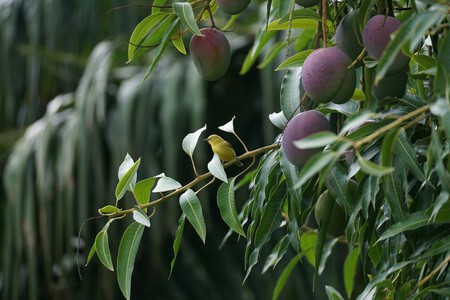
The Mango Boom: Spain’s Rising Exotic Fruit Industry
Europe has developed a strong appetite for exotic fruits, leading to a flourishing business that has seen a nearly 20% increase in imports between 2018 and 2022 alone. This trend has been evident for over a decade, with Spain establishing itself as a key player in this market by capitalizing on its ideal growing conditions for fruits such as avocados, custard apples, and especially mangoes. Farmers in Spain are now predicting a record harvest of 35,000 tons of mangoes, significantly doubling last year’s yield due to a fortunate mix of droughts and spring rains.
Reinvention in Agriculture
Changing climates and evolving consumer preferences have compelled farmers to adapt their crops. Spain’s agricultural landscape has seen a significant shift toward more profitable varieties, with mango cultivation expanding into regions where it was once considered nonviable. Although the mango originally hails from Southeast Asia, its introduction to Spain can be traced back to the 18th century, with commercial cultivation commencing in the 1970s in the Canary Islands and 1980s on the mainland.
Currently, mango cultivation spans approximately 6,044 hectares, primarily concentrated in the Axarquía region of Malaga and the Tropical Coast. The remarkable increase—from just 1,180 hectares cultivated in Spain in 2007 to a nearly sizeable area today—reflects the growing importance of mango farming in the Spanish agricultural economy.
Ideal Conditions for Mango Cultivation
Crop success hinges on specific environmental conditions. Mangoes thrive in warm climates with well-drained soils and, importantly, the absence of frost. This makes Malaga and the Tropical Coast prime locations for production, with the Axarquía region now being considered a European epicenter for mango cultivation.
As the mango industry gains momentum, local farmers have organized into associations, advocating for visibility in a competitive market. Noteworthy examples include the Tropical Association and Trops, both of which are working on promotional campaigns to boost national mango consumption in Spain.
A Record Harvest
The anticipations for this year’s mango harvest are higher than ever, primarily due to favorable weather conditions like spring rains and a reduction in prolonged drought periods. Farmers expect to produce a record-breaking 35,000 tons, a landmark amount for Spain, even as it pales in comparison to the millions harvested annually in countries like India and Thailand.
Significantly, this substantial figure should be viewed alongside rising production costs and the fluctuating market prices for mangoes. Current prices hover around 70 to 80 cents per kilogram, a stark contrast to the average of €1.50 per kilogram from previous years. This price drop underscores an ongoing challenge farmers face—balancing high yield expectations with market realities.
What’s at Stake?
The potential for a substantial harvest is exciting, yet this increased yield comes with its own set of challenges. Labor shortages pose a significant problem as farmers require many hands during the short, intensive harvest period. As stated by Santiago Sánchez, general secretary of Asaja Málaga, there’s concern that the workforce may be insufficient to manage the doubling harvest quantity this season.
“The mango harvest has a short and intense campaign, which requires a lot of labor,” says Sánchez, highlighting the competition for workers during this crucial time.
The Future of Exotic Fruits in Spain
The booming mango industry exemplifies the immense potential for Spain in the exotic fruit sector. With growing demand across Europe, the cultivation area dedicated to mangoes—and other exotic fruits like avocados—continues to expand rapidly. Recent reports indicate that Spanish exports of tropical fruits have surged dramatically, with volume growth estimated at 75% and value at approximately 174% over the last decade.
Spain is positioned not just as a producer, but as a vital supplier of tropical fruits to the European market. As consumer preferences evolve and the appetite for exotic fruits grows, many farmers are already transitioning from traditional crops to more lucrative varieties like the mango.
Navigating Challenges Ahead
Despite the promising forecasts, the mango sector must navigate a myriad of challenges, particularly concerning market stability and labor shortages. Farmers and associations are making efforts to advocate for better pricing structures to ensure economic viability.
As the mango proves to be more than just a fruit in the eyes of the Spanish agricultural sector, it symbolizes a new opportunity for innovation and growth. The amalgamation of favorable climatic conditions, growing consumer trends, and potent farming practices can afford Spain a more dominant role in the global exotic fruit market, allowing it to flourish in the coming years.
In the end, the future of the mango industry—and the broader category of exotic fruits—depends on the ability of farmers to adapt, evolve, and thrive amid changing economic landscapes.