
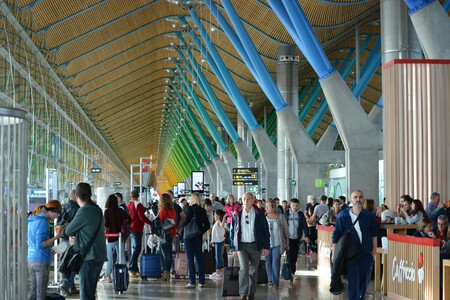
Spain’s Airport Capacity Crisis: Aena Takes Action
As travel ramps up in Spain, airports like Madrid-Barajas and Barcelona-El Prat are experiencing unprecedented passenger volumes. Aena, the operator of Spain’s airport network, has reported a record influx of travelers that has led to the decision to limit capacity at these critical hubs.
Record-Breaking Numbers
Recent data indicates that both El Prat and Barajas have approached or even surpassed their operational limits. For instance, in 2025, Barajas processed approximately 68.2 million passengers, almost reaching its cap of 70 million. El Prat, on the other hand, has already exceeded its capacity limit of 55 million passengers. This sharp rise isn’t merely a seasonal anomaly; it reflects a growing trend that has Aena scrambling to manage the overwhelming flow of travelers.
Aena’s Response: Techniques and Strategies
To mitigate potential collapse during peak travel seasons, Aena has devised a strategic approach that aims to optimize available capacity by reconfiguring how air traffic is organized at these airports. The goal is to alleviate congestion without sacrificing service quality.
Redistribution of Space
Aena’s new strategy involves “ordering and distributing” terminal space more efficiently when responding to airlines’ requests for flight slots. Unlike previous operational plans that were based solely on overall runway capacity, Aena will now consider individual terminal capacities and the types of passenger traffic when allocating available slots. This approach will help in managing peak demand periods more effectively.
Focus on Off-Peak Hours
Aena is also determined to “deseasonalize” slot allocation during peak hours, encouraging airlines to stagger their operations towards off-peak times. This dynamic adjustment ensures that while the current capacity remains unchanged, the overall efficiency of airport operations improves, thus reducing the strain on facilities during high-traffic times.
Projected Developments and Future Investments
While Aena’s immediate solutions focus on traffic management, architectural expansions are already in discussion to sustainably increase capacity. Investments approaching €12.9 billion are proposed between 2027 and 2031, with significant allocations earmarked for enhancing Barajas and El Prat. This forward-thinking approach signals a robust commitment to addressing long-term capacity challenges.
The Bigger Picture
This situation isn’t unique to Spain; globally, airports like Heathrow and Amsterdam have also restricted flight numbers in response to management challenges post-pandemic. However, Aena emphasizes that its measures are temporary and intended to manage the current crisis effectively.
Conclusion
As Spain’s tourism continues its upward trajectory, the pressure on its airport infrastructure grows correspondingly. Aena’s proactive measures to limit and reorganize airport capacity reflect not only the demand but also an awareness of the need for sustainable growth in aviation. This careful balancing act presents both a challenge and opportunity for Spain’s future in international travel, ensuring that the airports can continue to serve as vital gateways for millions of travelers every year.