
Russian Drone Threats: The New Frontier of Hybrid Warfare in Europe
The evolving landscape of hybrid warfare has thrust European airspace into the spotlight, with Russian drone incursions becoming a pivotal point of concern. In recent weeks, these unmanned aerial vehicles have wreaked havoc, prompting the closure of airports and prompting NATO air forces to heighten their alert statuses. This situation has reignited a crucial debate regarding Europe’s ability to defend itself against these cheap , stealthy , and evolving threats, giving birth to the concept of the “drone wall.”
The Invisible Threat has taken many forms across the continent. Incidents in Poland, Denmark, and Germany, where drones of unknown origin have breeched military bases and civilian locales, have initiated the urgent need for a comprehensive defense mechanism . These incidents have galvanized allies’ efforts to safeguard civilian populations and critical infrastructure while attempting to manage immediate responses and create a long-term strategy.
<img alt="Before tariffs, China bought most of its beef from the US. After tariffs, another country has won." width="375" height="142" src="https://i.blogs.es/a186b6/australia-ternera/375_142.jpeg"/>The Birth of the Wall
The initial idea of an anti-drone wall emerged months ago, informed by experiences from Ukraine and the realization that European forces lack adequate systems to handle the surge of drone technology. Baltic states , along with Poland and Finland, first pitched the concept to the European Commission, envisioning a technological barrier along NATO’s eastern flank—from the Baltic to the Black Sea. This initiative aims to monitor airspace for potential incursions, funded through border security budgets.
However, the wave of drone activity reported over Poland last September escalated this project significantly. Ursula von der Leyen , the European Commission’s President, stressed the necessity of a wall to not only protect Poland but also extend this shield across all of Europe. The idea has since evolved into the European Drone Defense Initiative , a groundwork for a collective air defense network to confront unmanned threats, soon to be unveiled in the Commission’s military readiness roadmap.
Europe Accelerates Defense Measures
As political discussions surrounding funding and jurisdiction continued, countries took proactive steps. Denmark swiftly installed Doppler radars in key urban areas and military bases, aiming to detect any suspicious movements . Sweden announced a hefty 370 million dollar investment in interceptors and jamming technology, while Germany enacted legislation enabling law enforcement to down drones deemed as imminent threats. The UK, for its part, deployed spy planes undertaking twelve-hour reconnaissance missions along the Russian border.
Defense manufacturers are stepping up as well. Swedish company Saab has unveiled the Nimbrix missile , designed specifically for drone swarms, as well as the modular Loke system , developed in record time. Meanwhile, Denmark has taken a bold step by training military personnel to use shotguns for close-range drone interceptions—a clear indication of the urgency felt across Europe to close the technological gap .
The Challenges Ahead
Despite all this enthusiasm, the initial plan faced a political dilemma : Western and Southern Europe felt sidelined by an initiative heavily focused on Eastern Europe. Countries such as Spain, France, and Italy raised concerns regarding the all-encompassing nature of the threats, arguing that drone risks could emanate from various territory points.
In response, the Commission proposed expanding the scope of the plan to form a pan-European network of sensors, jamming systems, and offensive weapons, integrated cohesively under a unified command structure.
Defense Commissioner Andrius Kubilius acknowledged the existing limitations of EU capabilities, noting the necessity for learning from Ukraine’s experience garnered from years of conflict. The newly renamed initiative, European Drone Defense Initiative , aims for comprehensive coverage while simultaneously addressing the strategic priorities of 27 nations with varying military capabilities.
Additional Obstacles
The project still faces internal struggles over leadership. Smaller Eastern nations advocate for Commission coordination, while France and Germany resist relinquishing authority due to concerns over preserving national sovereignty in defense matters. Furthermore, experts caution that establishing an air defense “wall” could foster a false sense of security ; it is virtually impossible for any system to guarantee complete interception of invading drones.
Technically, connecting various systems—including radars, acoustic sensors , and artificial intelligence —into a cohesive operational network will take considerable time and financial investment. The defense mechanism must remain adaptable amidst a constantly evolving threat landscape.
Lessons from Ukraine
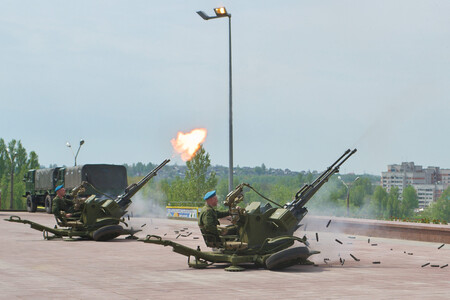
The ongoing war in Ukraine has imparted significant lessons: it is inefficient to counter cheap drones with expensive missiles. Thus, sustainable defense relies on intermediate solutions , employing drones that physically collide with enemies or low-cost laser systems. German defense manufacturer Rheinmetall has advocated utilizing artillery systems as a cost-effective measure and has already secured orders for its Skyranger mobile system from multiple nations.
Emerging companies from the Baltic and Germany, such as Marduk Technologies and Alpine Eagle , are pioneering their defensive schemes while adapting in real-time using feedback from the Ukrainian battlefield. This dynamic turns anti-drone defense into a living evolution of countermeasures, continuously incorporating human skill and computing intelligence.
The Future of the European Anti-Drone Wall
The success of the proposed European anti-drone wall ultimately hinges on three key factors: financing , political unification , and integration with NATO structures. Should the initiative receive European Project of Common Interest status, it would unlock substantial funding opportunities, necessitating cooperation among EU member states.
While initial excitement exists, the German Defense Minister has cautioned that achieving a fully operational drone defense wall could take more than five years, a timeline laden with bureaucratic obstacles, geopolitical rivalries, and urgent security challenges. As Europe reconsiders its airspace security, the discussion surrounding this modern digital wall highlights a profound truth: contemporary conflicts are waged not only on ground but also in the skies.