
| IN BRIEF |
|
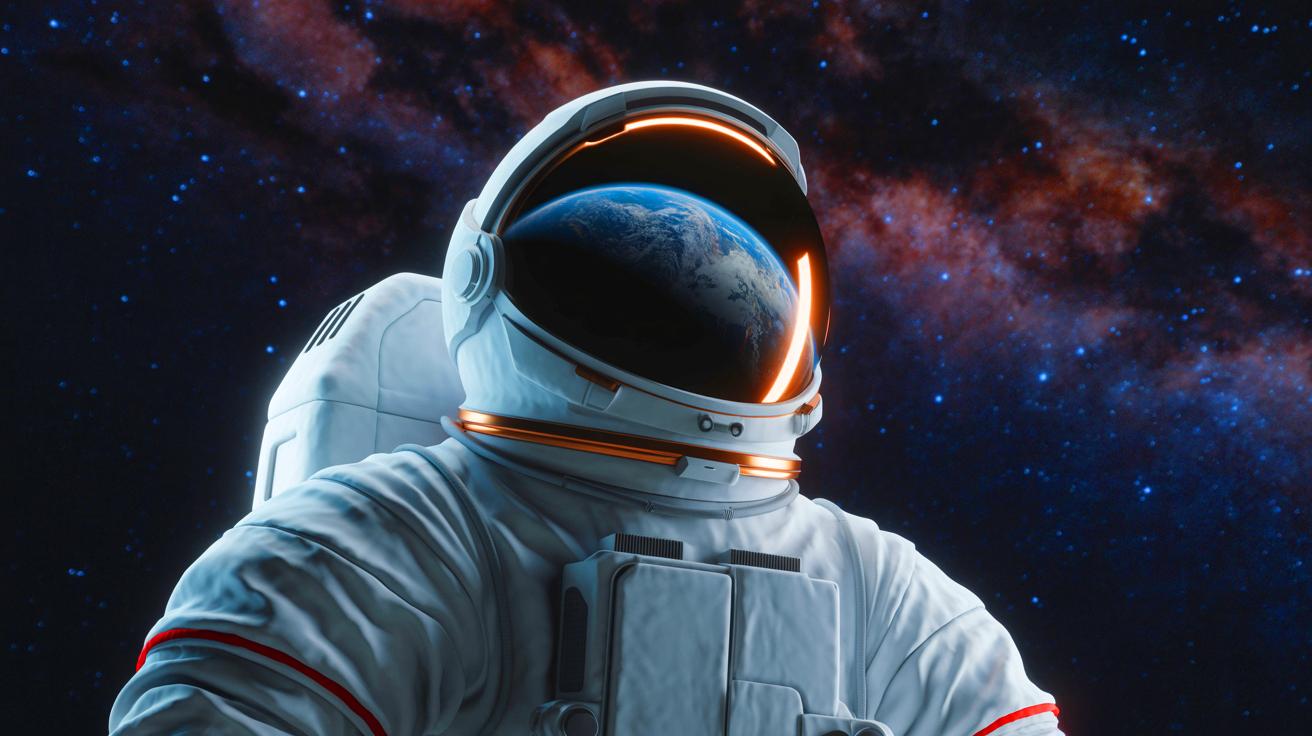
Space, often portrayed in movies as a place of brutal and spectacular death, conceals dangers that are much more insidious yet equally fatal. Cinematic dramas where bodies explode at the slightest depressurization are far from scientific truth. The real threat lies in phenomena such as internal boiling and rapid asphyxiation. This fascinating and frightening context reveals the true perils astronauts face during sudden exposure to outer space.
Pressure Without Explosion: The Silent Onset of Catastrophe
Transitioning from Earth’s atmosphere—where pressure is about 1 bar—to the vacuum of space causes body fluids to attempt immediate expansion. However, thanks to the resistance of connective tissues and blood vessels, the skin does not tear. The significant danger is the boiling: body water turns to vapor as external pressure dissipates. Richard Harding highlights in his book Survival in Space that water-containing body tissues begin to expand, much like a diver suffering from decompression sickness, but in a generalized and instantaneous manner.
The first casualty in such a situation is the air trapped in the lungs. In the absence of external pressure, remaining oxygen escapes rapidly, depriving the body of its vital oxygen source. Loss of consciousness occurs within seconds, leaving little time to act. The lethal combination of asphyxiation and internal boiling leads to a cascade of internal failures, which even rapid repressurization cannot always reverse.
Ten Seconds Before Fainting and the Myth of Freezing
Once unconscious, asphyxiation accelerates. Although rapid repressurization is possible, the body does not easily recover. According to Dr. Kris Lehnhardt, survival beyond two minutes without a spacesuit is improbable. Chris Hadfield, retired astronaut, notes that survival without a suit likely does not exceed 90 seconds. Myths about instant freezing are greatly exaggerated. In reality, space is “cold” due to its vacuum. Heat loss occurs mostly through radiation, not conduction or convection.
Decompression leads to the vaporization of body fluids, causing tissue swelling. The consequences are internal and much more terrifying than superficial cinematic representations. The lack of oxygen, boiling of tissues, and circulatory failures make every second critical for potential survival.
An Amplified Solar Flux from Space: This British Breakthrough Could Disrupt Global Energy Supply
Radiation: The Invisible but Non-Immediate Threat
Another misconception is that exposure to space radiation results in instant death. While space radiation is dangerous, its effects are primarily long-term. In the vacuum of space, the absence of a protective atmosphere exposes astronauts to increased levels of ionizing radiation, raising the risk of cancer and neurological damage over time. However, during sudden decompression, the main threats remain asphyxiation and boiling. These conditions lead to unconsciousness within seconds, followed by death in a few minutes.
Ultraviolet radiation can cause burns, and prolonged exposure to ionizing radiation increases health risks, but these effects are not immediate when facing a vacuum. Survival thus relies more on the rapid management of decompression than on protection from radiation.
Shocking Investigation: These Well-Known Influencers Who Buy Followers to Make Money
Real-World Disasters
Real accidents have demonstrated the dangers of pressure changes. In 1983, the Byford Dolphin incident was one of the most extreme examples of explosive decompression. Four divers faced a rapid pressure drop, resulting in severe and fatal injuries. This incident highlights the brutality of sudden pressure differentials, even though outer space represents a more moderate pressure drop compared to underwater depths.
Joe Kittinger’s experiments during his balloon jump from over 30,000 meters showed that the body can sometimes withstand extreme conditions, though recovery depends on complex factors. Decompression incidents in vacuum chambers, like the one experienced by Jim LeBlanc, illustrate the rapid need for intervention to prevent permanent damage.
The scientific reality of exposure to the vacuum of space is far from Hollywood exaggerations. It shines a light on human fragility in the face of extreme conditions. The real question then becomes: how can technology and astronaut training continue to evolve to minimize these inherent risks in space exploration?
The author used artificial intelligence to enrich this article.
Did you enjoy it? 4.7/5 (25)