
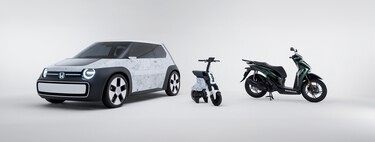
Honda has encountered a significant setback in its journey into the electric vehicle (EV) market, announcing the cancellation of its planned electric cars, including its much-anticipated collaboration with Sony to produce the Afeela. This decision is poised to impact Honda’s finances to the tune of approximately $22.5 billion, highlighting the formidable challenges this automotive giant faces.
The Promising Beginnings of Honda’s Electric Journey
Seven years ago, Honda was positioning itself as a competitive player in the electric vehicle landscape, announcing its commitment to transition to electric cars in Europe by 2022. During this optimistic phase, the company unveiled plans to develop three distinct electric models aimed at the US market and even partnered with Sony for innovative tech integration.
However, as of today, Honda’s European offerings lack any electric vehicles, raising questions about the viability of its earlier promises. The Honda e saw limited success largely due to its high cost, while newer models like the e:Ny1 failed to make a mark in the competitive landscape.
The Cancellation of Afeela and Its Implications
As recent developments unfold, Honda has officially canceled its plans for its electric lineup, including Afeela, which had been touted as a technological marvel expected to launch by 2026. Originally set at a price range of $89,900 to over $100,000, the car was positioned to mix Honda’s automobile manufacturing expertise with Sony’s software prowess. But as it turns out, the economics of producing a single platform for multiple vehicles simply became unfeasible.
This cancellation not only reflects poorly on Honda but also signals a retreat from the electrification strategy in a market that has not fully embraced electric vehicles. The lack of a robust charging infrastructure in the US and fluctuating governmental policies further complicate the industry’s transition.
The Rise of China: A New Paradigm in Electric Vehicles
Amid Honda’s struggles, Chinese companies like Huawei and Xiaomi have surged ahead in the EV market. While Honda and Sony falter, these tech giants are rapidly transforming the automotive paradigm. By integrating their own ecosystems into vehicles, particularly in software and user interfaces, they are setting a new standard. Huawei, for instance, has formed collaborations with established manufacturers like Toyota, showcasing its prowess in both hardware and software development for EVs.
The cancellation of Afeela serves as a stark reminder of how different the narratives are for companies in Japan and China. As Honda and Sony stumble, companies like Huawei are not just keeping pace; they are redefining what it means to build an electric vehicle.
Lessons Learned and Future Paths
The cancellation of Honda’s electric plans is a cautionary tale for other companies venturing into the evolving landscape of electric mobility. What was once seen as a certain trajectory has shifted dramatically. Established names are not guaranteed success while agile and technologically advanced companies from China are emerging as leaders.
In conclusion, the electric car saga illustrates a fundamental truth: the landscape is shifting, and the pace of innovation matters. As traditional automotive giants grapple with their identity in an increasingly digital age, it will be fascinating to see how they adapt—or fall behind. The future of electric mobility may very well rest on who can pivot the fastest and integrate technology most effectively into their vehicles.