
| IN BRIEF |
|
The disparities in gas prices across Europe raise many questions. In France, despite a slight recent decrease, the cost of gas remains high compared to several other European countries. This situation sheds light on significant economic and geopolitical differences. Eastern European countries benefit from more favorable rates, while Western and Northern Europe, including France, face higher prices. These variations reflect multiple factors ranging from fiscal policies to historical realities. Let’s explore how these elements influence the gas market across the continent.
Energy Inequalities in Europe
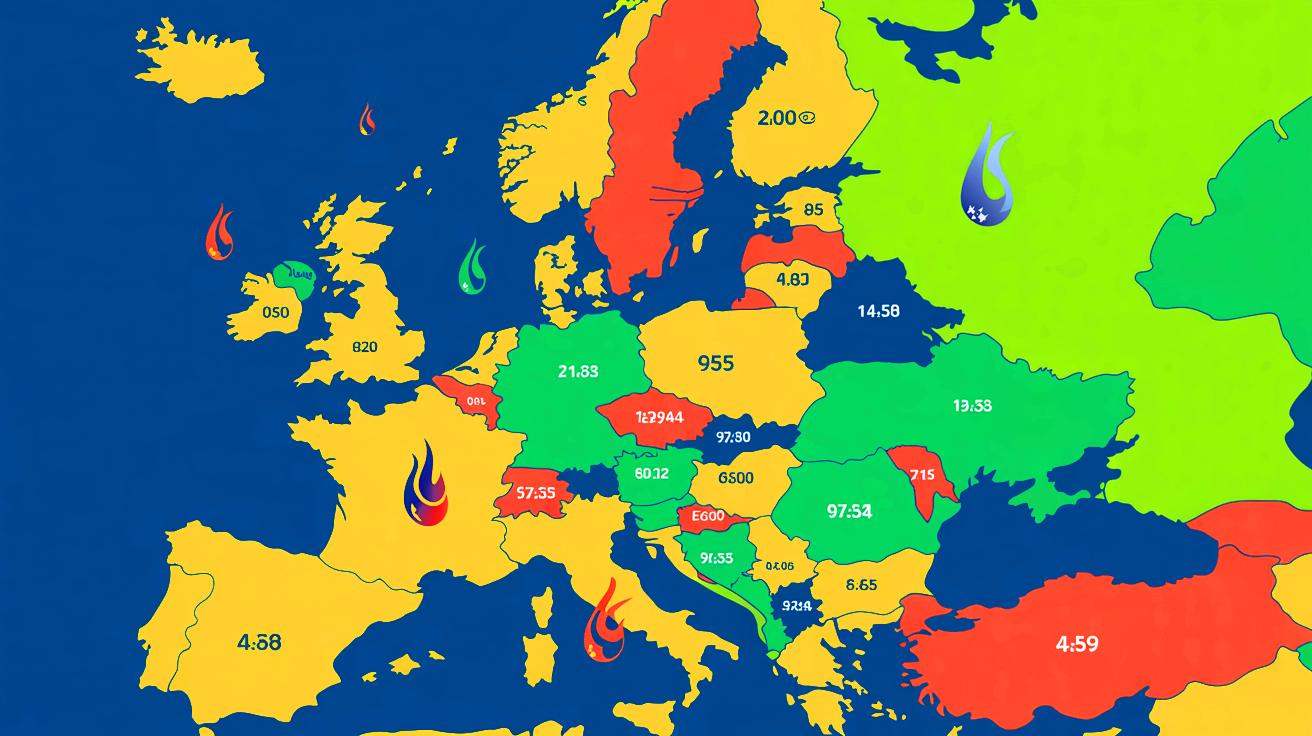
The gas market in Europe is anything but uniform, with prices varying considerably from one country to another. This price diversity is largely due to geopolitical and economic factors. Eastern European countries often enjoy lower tariffs, partly due to their historical ties with Russia, which remains a significant gas supplier. Conversely, Western European countries, such as France and the Netherlands, display higher prices influenced by greater logistical costs and heavier taxation.
A comparative table of gas prices highlights these disparities:
| Country | Average Price per kWh (euros) |
|---|---|
| Turkey | 0.0163 |
| France | 0.1181 |
| Netherlands | 0.1626 |
| Sweden | 0.1760 |
These figures clearly show that Eastern Europe offers more competitive rates than Western Europe, accentuating an economic divide within the European Union.
Factors Influencing Gas Prices in France
In France, the price of gas is influenced by several internal and external factors. The French energy tax is higher than in some neighboring countries, contributing to maintaining prices at a relatively elevated level. Furthermore, France’s dependence on imported liquefied natural gas makes costs steeper compared to gas transported through pipelines.
In June 2025, a 5.3% decrease in the price per kWh was announced by the Energy Regulation Commission. This change represents a substantial annual saving for French households, but it is insufficient to align gas prices in France with the lower levels observed elsewhere in Europe. Increased logistical costs and an energy policy aimed at diversifying supply sources also play crucial roles in determining the final gas price for consumers.
Future Price Trends for Gas
The gas market in Europe continues to evolve, influenced by environmental and political factors. The transition to renewable energy sources and geopolitical instability can lead to significant changes in gas prices. Efforts to reduce dependence on Russian gas have resulted in an increased search for alternative suppliers, which may stabilize prices in the long run.
In France and throughout Europe, governments are investing in more sustainable energy infrastructures, which could impact long-term costs. However, international market volatility and geopolitical tensions remain major challenges for policymakers and consumers.
The Role of the European Union in Price Regulation
The European Union plays a vital role in regulating the gas market, aiming to harmonize energy policies among member states. Since the market opened up for competition in 2007, progress has been made, but price uniformity remains a distant goal. Regional differences continue to pose challenges, both economically and socially.
Initiatives aimed at developing cross-border infrastructures and common gas purchasing policies could help reduce price gaps. The European Union is also striving to promote energy efficiency and technological innovation to mitigate the impact of energy price fluctuations on consumers.
Looking ahead, how will the European Union balance the diverse energy needs of its members while ensuring a transition to cleaner and more affordable energy for all?
This article has incorporated insights from artificial intelligence to enrich its content.