
Spain’s New Technology in Student Surveillance
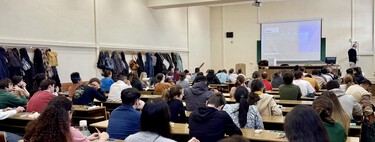
June and July are pivotal months for nearly 300,000 students in Spain gearing up for the University Access Test (PAU). In an effort to maintain academic integrity, some educational institutions have adopted advanced surveillance techniques. One notable innovation is the introduction of radio frequency detectors — devices designed specifically to identify hidden technologies that may be used for cheating, particularly in the age of artificial intelligence.
What are Radio Frequency Detectors?
Unlike signal jammers that disrupt communications, radio frequency detectors only locate signals. According to Héctor Esteban, a professor at the Polytechnic University of Valencia, these detectors specialize in electromagnetic radiation tracking and can detect WiFi, Bluetooth, and 3G, 4G, and 5G networks. Priced between 10 to 12 euros, they emit an alert — either a beep or vibration — when a nearby signal is detected. These compact devices can easily be carried by educators in their pockets, allowing discreet monitoring during exams.
Aim of the Initiative
The objective of using these detectors extends beyond merely targeting conventional mobile phones. Rosa de la Fuente, vice-rector of Students at Complutense University, articulated a concern for less visible technologies, like micro-ears and AI glasses, capable of obtaining external answers or responses from chatbots. The initiative aims to curtail all forms of technological cheating.
Geographical Implementation
This surveillance measure is not universally applied across Spain. The six public universities in Madrid have begun utilizing these detectors for their over 42,000 students. Additionally, several other regions including Galicia, Murcia, and Catalonia have initiated similar measures, although the devices are not deployed in all classrooms simultaneously. Cristina Moreno, vice-rector of the University of the Balearic Islands, indicated that the detectors rotate through different locations, ensuring varied oversight.
Protocol for Alerts
In the event that a detector signals an alert, the exam is flagged but the student is allowed to continue. Post-exam, the situation is reviewed by a committee that will decide on any necessary sanctions. The consequences for violations differ across regions, with varying penalties in Madrid designated for minor, serious, and very serious infractions related to mobile device use. At institutions like the Polytechnic of Valencia, students may fail a subject simply for possessing a mobile phone, even if turned off.
Limitations of the Technology
Despite their promising application, experts like Jesús Alcalde, a cybersecurity specialist, assert that these detectors have limitations. Their effectiveness is contingent on detecting active signals, and they can sometimes yield false positives in crowded environments. Their primary usefulness may lie more in acting as a deterrent rather than a foolproof detection mechanism. Instances have been noted where simply announcing their presence led many students to voluntarily submit their unauthorized devices.
The Role of Generative AI
The rise of generative AI has added a new dimension to the issue of academic dishonesty, making the challenge of cheating more complex. Universities acknowledge that this is a pilot project and that the effectiveness of detectors will need continual evaluation. The evolving nature of cheating technology means that adaptation on the detection front is essential.
Looking Ahead: Rethinking Evaluation Methods
While radio frequency detectors provide one layer of oversight, many in the academic sector believe that a more fundamental solution lies in reimagining assessment methods. Suggestions include incorporating oral exams or in-person paper defenses to foster a more robust academic environment.