
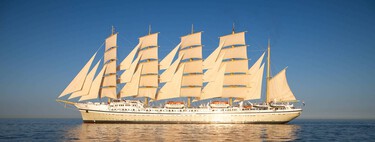
Ships long ago stopped using sails for propulsion powered by wind alone, favoring engines and propellers. However, innovative companies are bringing sails back into the fold, seeking to reduce emissions from the maritime industry. Notably, large vessels like the Pyxis Ocean, with a weight of 81,000 tons, illustrate that wind-powered ships can once again navigate our seas. This modern approach reflects a commitment to sustainable shipping practices in line with global trade.
Innovative Approaches to Decarbonization
The maritime sector is under pressure to meet decarbonization goals, with an emphasis on reducing emissions. Solutions such as hydrogen, methanol, and electrification are widely discussed. Yet, the Pyxis Ocean proves that sails still have an important role in this transformation.
The Pyxis Ocean is a bulk carrier owned by Mitsubishi Corporation, specializing in transporting bulk cargo such as grains and minerals. This massive vessel isn’t just for transporting goods but serves as a pivotal player in the global trade ecosystem, even with sails on board.
Specifications and Functionality
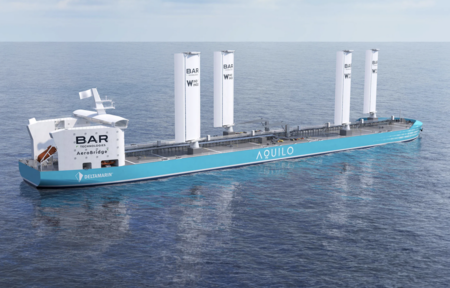
Spanning 229 meters in length and 32 meters in width, the Pyxis Ocean features two large sails situated at the front and midsection of the ship. Each sail stands 37.5 meters tall and 20 meters wide, harnessing wind power effectively without the traditional “inflation” seen in classic sailing ships.
These sails, known as WindWings, represent a modern take on sail technology. Constructed from a rigid combination of steel and fiberglass, they resemble airplane wings more than conventional sails. Their design allows them to adapt automatically to optimize efficiency based on current wind conditions, working autonomously without requiring additional energy or crew intervention.
Performance and Results
When the Pyxis Ocean embarked on its journey, skepticism surrounded the efficacy of its sail technology. Critics labeled the project a “risky bet.” However, two years later, positive data emerged: under optimal conditions, the ship’s sails can reduce main engine power consumption by 32% per nautical mile. Over a six-month testing period, it saved approximately three tons of fuel daily and continued to operate successfully.
It’s important to note that the development of these sails isn’t solely credited to Mitsubishi but to BAR Technologies. The initial success has encouraged advancements in sailing technology, resulting in new sizes for different types of vessels. Given that each sail can save 0.7 tons of fuel daily, these WindWings can be retrofitted to both new and older ships.
The industry’s interest in wind-assisted propulsion systems extends beyond mere curiosity. For example, the Brands Hatch, a Union Maritime tanker with three WindWings, has demonstrated that these inventions indeed carry significant potential, contributing to more than one-third of its propulsion needs, thus reducing emissions substantially.
A Future Driven by Wind
While initial forecasts suggested that by 2025 half of new vessels would leverage wind power, optimism remains. Despite not meeting projections, the success of existing technologies has prompted stakeholders like the International Windship Association to predict the installation of over 100 large ships operating with wind technology by year-end, aiming for up to 40,000 systems by 2050.
Ultimately, the maritime industry is circling back to historical methods to confront contemporary challenges. As we observe the evolution of wind technologies like the WindWings, it remains to be seen whether these modern sails will reshape the future of global shipping.