
New Findings on Earth’s Core and Surface Connection
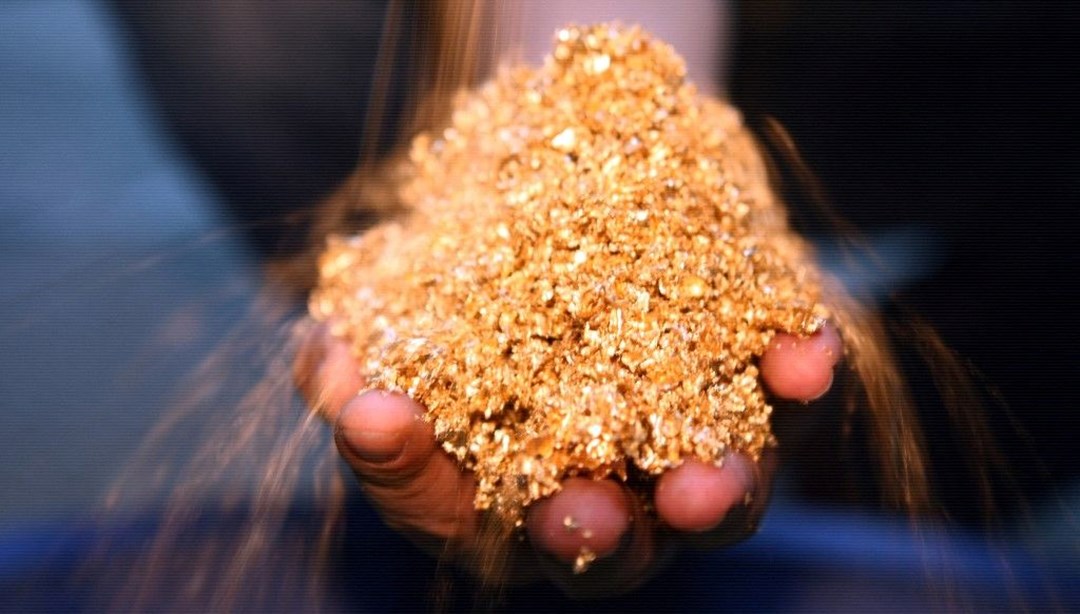
Recent discoveries published in Nature suggest that some of the gold and other valuable elements found on the Earth’s surface may originate from its core. This theory opens up intriguing questions about the formation and composition of our planet.
Focus on Ruthenium from Hawaii
The study centers on the rare metal ruthenium, which is closely associated with gold and platinum. Researchers examined lava samples from the Hawaiian Islands and identified a small variation in a specific isotopic form known as 100Ru. This type of ruthenium is more commonly found in Earth’s metallic core than in the rocky mantle, which is the layer just above the core.
Significant Discoveries Using Advanced Techniques
According to the Greek Reporter, such minor differences were not detected previously due to technological limitations. Earlier methods were nearly identical in how they analyzed these isotopes. However, researchers from Göttingen University have developed cutting-edge techniques that allow for the definitive identification of these differences.
"Signals from 3,000 Kilometers Beneath the Surface"
Using these advanced methods, scientists discovered an unusually high signal of 100Ru in Hawaiian lava. The research posits that this exceptional finding can only be explained by the material coming from approximately 3,000 kilometers below the Earth’s surface, specifically from the boundary where the mantle meets the core.
Dr. Nils Messling from the university’s Geochemistry Department explained, "When the initial results came in, we realized that we had literally struck gold. Our data confirm that material from the core, including gold and other valuable metals, has seeped into the mantle above the Earth."
Challenging Long-held Theories
These findings challenge the long-standing belief that the Earth’s core is completely isolated from the rest of the planet. Professor Matthias Willbold, a member of the research team, indicated that the data suggests that heated rocks are undergoing large-scale movement.
Willbold stated, "We can now prove that a substantial amount of superheated mantle material—hundreds of quintillion metric tons of rock—has emerged from the core-mantle boundary and has risen to form ocean islands like Hawaii."
Implications for Earth Science
The implications of these discoveries are profound for the field of geology and our understanding of planetary formation. For years, the scientific community has viewed the Earth’s core as a static entity, separate from geological processes that occur in the mantle and crust.
The information gleaned from these lava samples provides new insights into how material is transferred between the Earth’s core and surface layers. This transfer could primarily occur during volcanic eruptions, where the material from deep within the mantle breaks through to the surface, bringing with it precious metals and other elements.
The Role of Mantle Plumes
The study raises questions about the role of mantle plumes—localized areas of the mantle that can create significant volcanic activity. Research suggests that these plumes might act as conduits that allow material from the core to reach the surface, thus influencing volcanic islands such as Hawaii.
Understanding these mechanisms can also lead scientists to better comprehend how geological phenomena such as earthquakes and volcanic activity arise.
Future Research Directions
Further investigation is necessary to explore the specific processes that govern the movement of materials from the core to the mantle and ultimately to the Earth’s surface. Scientists are considering additional studies to look for similar isotopic signatures in other regions around the world, which could confirm that this phenomenon is not isolated to the Hawaiian Islands.
Moreover, ongoing advancements in analytical techniques will enable researchers to further refine their understanding of how the Earth’s layers interact.
As our tools and methodologies evolve, so too does our perspective on Earth’s dynamic systems.
The Broader Significance
The revelation that significant quantities of material from the core could find its way to the surface challenges existing paradigms in geoscience. It could necessitate a re-evaluation of current models that describe Earth’s inner workings and its geological history.
This research provides a fresh perspective not only on the origins of valuable materials like gold and platinum but also on the broader processes that drive Earth’s geology.
Conclusion
The groundbreaking findings concerning the connection between Earth’s core and surface enrich our understanding of planetary systems, potentially revolutionizing the field of geology. It opens a new chapter in the investigation of how invaluable resources reach our planet’s surface and encourages us to continue exploring the complexities of our home. The journey to unravel the mysteries of the Earth has just begun.