
The Fascinating Search for New “Blue Zones” in Finland
For years, scientists have been intrigued by the concept of “Blue Zones” , regions where people are believed to enjoy longer, healthier lives. This curiosity stems from questions about the unique lifestyles, diets, and genetic factors contributing to remarkable longevity. Well-known Blue Zones include areas like Okinawa in Japan, Ikaria in Greece, and Sardinia, Italy. Recently, a team of Finnish researchers from the Åbo Akademi in Turku embarked on an exciting venture to discover whether there is an untapped Blue Zone in Western Finland , particularly in the Ostrobotnia region. Their research will shed new light on our understanding of these exceptional areas.
Understanding Blue Zones
So, what exactly defines a “Blue Zone” ? These regions are characterized by an unusually high number of centenarians, with longevity attributed to several lifestyle factors, including diet, social support, and regular physical activity. The concept gained traction in 2004 when researchers published a comprehensive study spotlighting Sardinia’s centenarians, marking the areas with higher longevity on a map in blue.
The popularity of Blue Zones surged in 2005 when a National Geographic article highlighted three key regions: Okinawa, Loma Linda (California), and Sardinia. The article connected their populations’ longevity to healthy habits, such as balanced diets, physical activity, strong community ties, and controlled stress levels. Consequently, the idea of Blue Zones captured global attention, igniting ongoing debates regarding their characteristics and the scientific validity behind them.
New Research from Finland: A Potential Blue Zone?
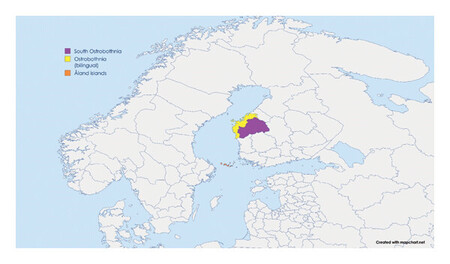
The Finnish researchers focused on several territories within Western Finland , particularly the Ostrobotnia region , South Ostrobotnia , and the Åland islands . Their study aimed to analyze longevity indicators and discover which cities exhibited healthier lifestyle habits. The Åbo team was motivated to investigate whether these areas could meet the criteria for a Blue Zone.

Statistics Highlighting Longevity
The highlights of their findings were illuminating. For instance, the data published in the Journal of Aging Research revealed that the life expectancy for babies born between 2020 and 2022 was an impressive 83.5 years in the Åland islands, 83.1 years in Ostrobotnia, and 81.8 years in South Ostrobotnia. All figures exceeded the average life expectancy for Finland (81.6 years) and the broader EU average (around 81.5 years). Comparatively, the worldwide life expectancy in 2022 was 72.6 years.
Analyzing Lifestyle Factors
The Åbo research team emphasized that they did not limit their investigation to mere demographic data. The concept of Blue Zones integrates various lifestyle dimensions such as diet , social relationships , and motivation in life. The researchers discovered a complex relationship between these factors and longevity, suggesting that life expectancy might not align perfectly with the conventional attributes of a Blue Zone.
Implications on Future Studies
The findings suggest that while Ostrobotnia may display characteristics worthy of being classified as a Blue Zone, the correlation between longevity and lifestyle is not as clear-cut as anticipated. For example, areas like Åland, which exhibit higher life expectancy, do not perfectly align with the lifestyle characteristics commonly associated with Blue Zones. Conversely, Ostrobotnia, with a seemingly healthier lifestyle, reports lower life expectancy than other regions.
The conclusion drawn by the researchers might redefine the criteria for considering a region as a Blue Zone. They assert that not only are age and health important, but context also plays a crucial role. Understanding local cultural, political, and social factors is vital for determining how these factors interact and might affect longevity.
This research signifies a potential shift in our understanding of Blue Zones. The implications extend beyond just Finland, pushing researchers to consider a more nuanced approach when examining longevity across different cultures. The Åbo team’s findings emphasize that the principles of longevity can vary significantly depending on the region, initiating a broader conversation about what truly fosters a long and healthy life.
Ultimately, the allure of Blue Zones remains a captivating subject. As new data emerges, our perceptions will undoubtedly evolve, revealing deeper insights into how and where people thrive.