
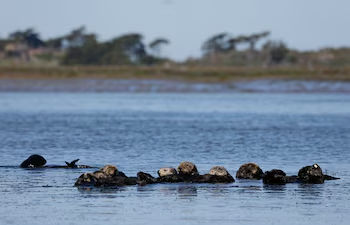
The Otter Plague: A Deliberate Introduction
Since 2017, California has been grappling with a dire issue: the surge of the South American otter, posing a significant danger to the state’s wetlands, agriculture, and water supply. The California Department of Fish and Wildlife (CDFW) has reported that managing this crisis incurs nearly USD 5 million annually in eradication efforts.
Genetic Research Unveils the Truth
A recent genetic study conducted by the CDFW revealed shocking findings. Contrary to previous beliefs, the current otter population does not stem from the remnants of the species eradicated in the 1970s but is likely due to a deliberate reintroduction from Oregon.
Tracing the Origins
DNA samples from modern otters were compared with historical specimens stored in California museums and contemporary populations in Oregon, Louisiana, Texas, Maryland, Virginia, Washington, Asia, and Brazil. This comprehensive research led to the creation of a global otter genetic similarity database, serving as a vital tool for monitoring invasive species.
The Journey of the Otter: From Fur Trade to Invasive Species
Originally introduced to the U.S. and other countries in the late 19th and early 20th centuries to boost the fur trade, the otter population dwindled as the demand for fur collapsed. Many otters were released into the wild, which initially led to small feral populations across various regions, including California. By the end of the 1970s, these populations were deemed eradicated.
Evidence of Reintroduction
The CDFW has clarified that the current otter population is not a result of hidden populations surviving the 1970s eradication. Valerie Cook, the manager of the Otter Eradication Program, confirmed that the ongoing invasion is indeed due to reintroduction efforts, emphasizing the need for strict biosafety inspections to prevent the import and spread of invasive species in California.
Control Measures and Challenges
The Los Angeles Times reports that the otter, distinguished by its rapid reproduction, can consume up to 25% of its body weight in vegetation daily. In California’s wetlands, this creates significant ecological challenges.
Since discovering a pregnant female in Merced County in 2017, CDFW teams have intervened to capture or remove a staggering 7,841 otters. Their strategies include using traps, tracking devices, motion detection cameras, and specially trained dogs.
Pioneering New Solutions
The challenges associated with controlling the otter population have led to unconventional proposals, such as promoting the consumption of otter meat. This idea has sparked significant interest on social media platforms, with even TikTok users experimenting with recipes featuring this invasive rodent.