
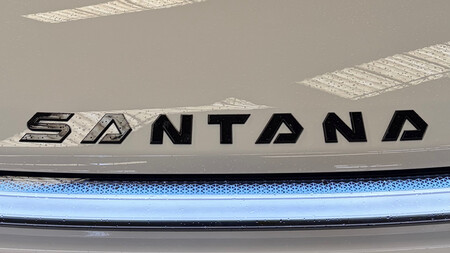
Santana 400 D and 400 PHEV: A Revival of a Classic Brand
Santana is determined to make a comeback in the automotive world, faced with both an inspiring legacy and daunting challenges. After the closure of its factory in Linares 14 years ago, the brand aims to reignite its tradition of robust off-road vehicles. With new partnerships, primarily with Chinese companies, the Santana project is shifting gears to merge nostalgia with innovation.
New Beginnings with the Santana 400 Series
The resurgence begins with two models: the Santana 400 D, a diesel variant, and the Santana 400 PHEV, a plug-in hybrid. Both vehicles are based on the Dongfeng Z9 platform, a well-regarded off-roading vehicle in the Chinese market. The new Santana vehicles will be assembled from kits imported from Asia, minimizing the initial investment while also imposing limits on long-term growth.
Specifications Breakdown
| Feature | Santana 400 D | Santana 400 PHEV |
|---|---|---|
| Body Type | Pickup | Pickup |
| Dimensions | 5.520 m long, 1.960 m wide, 1.950 m high | 5.494 m long, 1.960 m wide, 1.950 m high |
| Weight | 2,280 kg | 2,325 kg |
| Max Power | 190 HP | 429 HP (combined) |
| Fuel Consumption (WLTP) | 9.3 L/100 km | Pending homologation (120 km electric range) |
| Starting Price | €29,900 | €44,700 |
Driving Experience
Early test drives of the Santana 400 models have revealed promising performance. The vehicles convey solid handling, robust isolation from external noise, and smooth steering, adjustable through various driving modes. Particularly, the hybrid version offers impressive acceleration, combining a gasoline engine with an electric motor for a powerful driving experience.
The interior offers ample space and a user-friendly interface, with a combination of digital screens and tactile buttons. However, it notably lacks Apple CarPlay and Android Auto, settling on a temporary solution with the Carbit app for mobile integration.
Market Positioning and Future Prospects
The European pickup market is fiercely competitive, dominated by well-established brands such as Ford. Santana aims to effectively sell around 2,700 units in its first year, a conservative target given the initial €5 million investment. The company’s marketing strategy revolves around honoring its legacy while adapting to modern demands.
As Santana prepares for production at a pace of 500 units per month starting in February 2026, the excitement in Linares hints at revitalization, promising hundreds of job opportunities and rekindling community pride.
Conclusion: Can Santana Make a Sustainable Comeback?
Only time will reveal if Santana’s revival will become a lasting success or fade once more. With a lineup that merges historical credibility and modern specifications, the road ahead looks promising for this iconic brand. While challenges are manifold, the potential to bring robust, well-equipped pickups to the market is an exhilarating next chapter in Santana’s storied history.