

At the end of May, satellite images uncovered Russia’s intentions regarding Europe’s largest nuclear power plant. Amid heightened nuclear tensions following the war in Ukraine, new images from space have revealed alarming patterns of expansion and renewal within five Russian nuclear bases that have historically operated under the radar of international scrutiny.
Secret, or almost. This situation was extensively detailed in an INSIDER REPORT featuring images captured by the American company Planet Labs . Experts in strategic armament analyzed these photographs, revealing not only new structures but also reinforced roads, buried bunkers, and multiple security perimeters. All these factors indicate a systematic and secretive investment in Russian nuclear infrastructure.
While some of these improvements could be categorized as routine maintenance, the scale and intensity of the construction efforts indicate something more profound. They represent a strong commitment to enhancing Russian nuclear capabilities as instruments of deterrence , influence, and survival amidst declining conventional military strength.
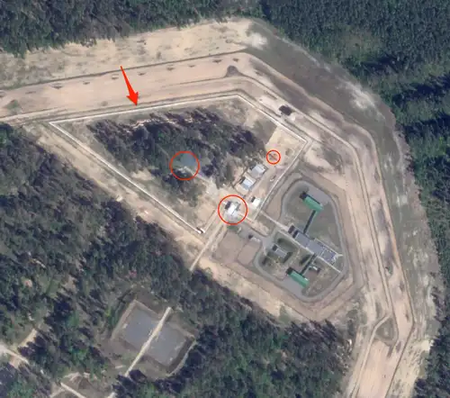
Asipovichy base
Asipovichy: The new nuclear enclave. The Asipovichy base has gained notoriety after Russia’s announcements that Belarus could potentially house Russian nuclear weapons. This facility now features triple fencing, camouflaged entrances, covered ramps for missile deployment, and a hidden bunker nestled among trees. Although no nuclear warheads have been confirmed as present, the infrastructure is clearly designed to receive them from major storage locations, such as Briansk .
The large platform and a new road suggest that rail transport will serve as the primary logistical medium, consistent with Russian military practices. Furthermore, a nearby complex houses mobile Iskander missile launchers, capable of carrying nuclear warheads, in recently enlarged hangars, reinforcing the idea that this site is a fully operational tactical node.
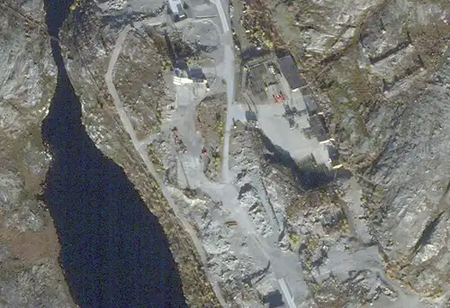
Gadzhiyevo base
Gadzhiyevo: Intercontinental missile hiding place. Located in the Arctic, the Gadzhiyevo naval base is under intense scrutiny due to its activity related to strategic submarines. Previous satellite images had already captured signs of nuclear warheads alongside specialized cranes, while new constructions suggest hangars or workshops for missiles that have yet to be operational.
Just a few kilometers away, Russian nuclear ballistic submarines are on standby in specially equipped docks, thus retaining the capability to launch devastating attacks on cities within minutes.
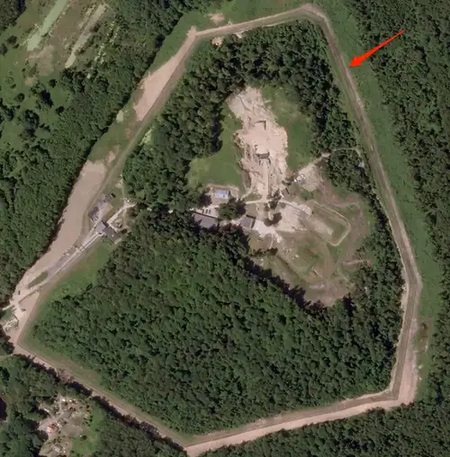
Kaliningrad base
Kaliningrad: The undercover arsenal. Situated in the Russian exclave of Kaliningrad , between Poland and Lithuania, a facility with multiple layers of fencing has long raised the suspicions of analysts as a potential center for tactical nuclear weapons. Recent satellite images confirm renovations in buried bunkers and the emergence of new structures, including one that resembles a smaller version of those seen at Asipovichy, though its function remains unclear.
Nearby, an inherited Soviet-era nuclear maintenance unit substantiates concerns about active nuclear weapons storage, escalating the potential risks in this critical area of NATO’s eastern frontier.
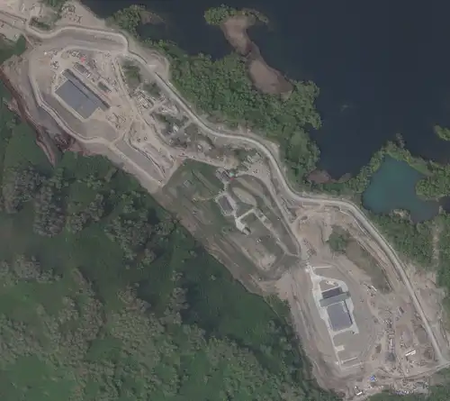
Kamchatka base
Kamchatka: Latent threat to Alaska. Meanwhile, on the remote Kamchatka Peninsula , located opposite Alaska, facilities have been identified for deploying the Poseidon nuclear torpedo . This weapon, powered by atomic energy, can travel thousands of kilometers underwater before detonating.
Although its operational status remains uncertain, recent constructions—such as two new buildings likely intended for weapon storage—underscore ongoing preparations. The presence of triple fences accentuates suspicions that nuclear weapons or their launch systems could also be housed here.
Novaya Zemlya: Risen test base. Lastly, the Arctic archipelago of Novaya Zemlya , historically a nuclear test center, has shown considerable base expansion. New buildings and tunnels excavated into the mountains, alongside sealed access points, suggest a revitalization of this complex either as a Subcritical Experimentation Center or as a platform primed for potential nuclear testing.
Even though Moscow and Washington maintain similar policies aimed at keeping these facilities operational without conducting high-performance weapon testing, the growing activity at Novaya Zemlya raises concerns about a possible return to active testing of nuclear devices.

The rebirth of a career. The simultaneous modernization of these five bases—some of which are entirely new—demonstrates how Moscow is recalibrating its strategic position in response to the prolonged conflict in Ukraine and the erosion of conventional military power. With an estimated active nuclear arsenal of 4,300 nuclear warheads , the largest in the world, Russia increasingly relies on its nuclear legacy as both a shield and a sword against NATO and the United States.
As we have noted, Washington continues its own nuclear modernization program, and China is quietly enhancing its atomic capabilities. This evolving landscape is restructuring global power dynamics, wherein the balance of nuclear capabilities becomes the cornerstone of deterrence, threat, and strategic survival.
Image | Google Earth, Planet Labs