
The Controversy Unfolds
After Argentina’s disappointing defeat to Spain in the 2026 World Cup final, social media buzzed with congratulatory messages and expressions of pride towards the national team. Among these was a post from Rosario Central that quickly gained attention—and controversy.
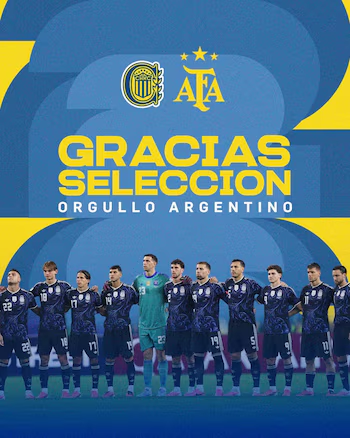
The club’s official account shared a heartfelt message: “Thank you Selection for representing our country with so much passion. You are a source of pride for all of us.” However, what sparked outrage was the choice of accompanying photo. The image featured the Argentine team during their match against Jordan, during which Lionel Messi did not start, causing many fans to question Rosario Central’s decision.
The Absence of Messi and Scaloni
The controversy surrounding the post primarily revolved around the glaring absence of two significant figures: Lionel Messi and head coach Lionel Scaloni.
Social media users criticized the decision to use a photo that did not include Messi, the team’s captain and all-time top scorer, while others pointed out Scaloni’s absence as well. The fact that both Messi and Scaloni had previous affiliations with Newell’s, Rosario Central’s old rival, only intensified the backlash against the club.
Comments such as “How are you not going to put Messi on?” echoed through various platforms, along with a notable reaction from Argentine figure Alberto Samid: “They just posted the photo of the day Messi didn’t start playing. My God.”
Public Reactions
The responses from fans and followers ranged from humorous jabs to serious critiques. Terms like “dry necks” and “desktop champions” circulated in the wake of the post, mocking the club’s perceived inability to honor its national team properly despite their recent successes. One disgruntled fan remarked, “They are a shame, very pathetic, missing Messi in the photo is disrespectful.”
In defense, some Rosario Central fans justified the selection, explaining that the match against Jordan was the only game where the featured player, Giovani Lo Celso, started. Despite this, the uproar exemplified a significant disconnect between the club’s intentions and the fans’ expectations.
Conclusion: A Lesson in Representation
The situation serves as a reminder of the powerful emotions surrounding national pride in Argentina, particularly when it comes to football. Clubs like Rosario Central navigate complex traditions and rivalries, making choices that can easily be misinterpreted.
In this case, the decision to omit Messi and Scaloni from such an important celebration sparked intense debate, highlighting the need for sensitivity when it comes to the symbols that represent a nation in sports. Going forward, Rosario Central, like many clubs, will need to carefully consider its messaging to unite rather than divide its diverse fan base.
With the stakes in Argentine football at an all-time high, the club must strive to promote unity while acknowledging the shared history and legacies of its players.