
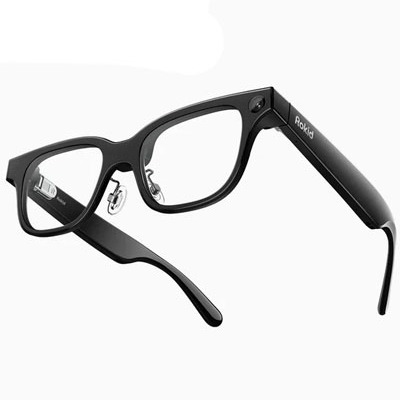
Rokid Glasses: In-Depth Review and Specifications
Overview
The Rokid AI Glasses present a compelling option in the realm of smart eyewear. Tailored for both casual users and content creators, these glasses blend traditional design with high-tech features reminiscent of Meta’s RayBan offerings. However, the real question is whether they can provide a useful experience without the inherent issues faced by many competing devices.
Technical Specifications
| Feature | Details |
|---|---|
| Display | Dual Micro LED monochrome, 1,500 nits brightness, 30-degree field of view, 18 mm eye relief |
| Dimensions | 155 x 49 x 44 mm |
| Weight | 49 grams |
| Processor | Qualcomm Snapdragon AR1 Gen 1 |
| RAM | 2 GB |
| Storage | 32 GB |
| Camera | 12 MP Sony IMX681, 4,032 x 3,024 resolution, fixed focus |
| Battery | 210 mAh, magnetic charging |
| Audio | 2 AAC speakers, 4 directional microphones |
| Connectivity | WiFi 6, Bluetooth 5.3 |
| Unique Features | Real-time translation for 89 online and 6 offline languages |
| Price | 699 euros |
Design and Build Quality
At first glance, the Rokid Glasses resemble conventional eyewear, embodying a “Wayfarer” style that’s both fashionable and functional. The plastic frame seems durable, though the battery integrated into the temples adds slight bulk. Users report comfort akin to regular bifocal spectacles, even for prolonged wear.
Features and Functionality
AI Interaction
One of the primary selling points of the Rokid Glasses is their integration with advanced AI, offering two conversational models: ChatGPT and Gemini. However, users may find the AI’s Spanish accent less than satisfactory, drawing upon a blend of Italian and British inflections. Voice commands, such as waking up the AI with “Hi, Rokid,” are generally recognized well, but continuing conversations can feel slow due to processing delays.
Camera and Video Recording
The Rokid Glasses include a robust camera setup allowing 12 MP photos and 3K video recording. Despite the impressive specifications, video quality may not live up to expectations, especially in dim lighting. The device functions well as a first-person camera, but performance can falter in less than ideal conditions.
Navigation and Real-Time Translation
One standout feature is the real-time translation capability, which overlays translated text within the user’s view. Furthermore, GPS navigation is facilitated through the glasses, providing directional cues. However, users may experience minor lag between receiving audio commands and the glasses displaying the translated output.
User Experience
While the glasses come equipped with intuitive controls—including a touch-sensitive section and dedicated capture buttons—some users may find the interface lacking in refinement. Furthermore, interactions with mobile apps remain cumbersome; essential functionalities often require a smartphone.
Concluding Thoughts
The Rokid AI Glasses encapsulate the potential of wearable tech, with a focus on usability for everyday tasks and content creation. However, certain limitations, especially regarding AI interaction speed and video quality, hold them back from being a definitive choice in the smart glasses landscape.
If you’re looking for a fully integrated smart eyewear experience, alternatives like the Meta RayBan still lead the pack. Nevertheless, with continued improvements, Rokid may soon refine its offerings to better meet user demands.