
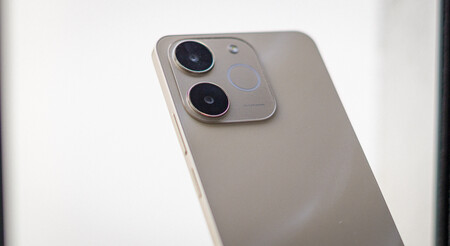
As the year draws to a close, Realme has had a successful 2025, establishing itself as a serious contender in the smartphone market. More than just a sub-brand of Oppo, it has released high-quality devices that rival other Android manufacturers. Among its standout models is the Realme GT7 Pro , but the mid-range and entry-level offerings are also impressive, particularly in terms of price-value ratio. Today, we’ll explore the new Realme Note 70T , which I’ve tested for several weeks for this review.
Having evaluated the entry-level and mid-range segments with models like the Realme C71, Realme 14 5G, and Realme 14 Pro+, it’s time to assess what the successor to the previous year’s Realme Note 60 brings. Although it didn’t surprise me with any groundbreaking features (it shares similarities with the Realme C71), I found the experience commendable—especially considering the price is just around €100.
Technical Specifications of the Realme Note 70T
Realme Note 70T | |
|---|---|
SREEN | 6.74-inch panel HD+ resolution (1,600 x 720 pixels) 90 Hz refresh rate 563 nits peak brightness |
DIMENSIONS AND WEIGHT | 167.2 x 76.6 x 7.94 mm 201 grams |
PROCESSOR | UNISOC T7250 |
RAM | 4GB Dynamic RAM up to 12GB |
STORAGE | 64 / 128 / 256 GB |
FRONT CAMERA | 5 MP, f/2.2 |
REAR CAMERA | 13 MP main, f/2.2 Depth sensor |
BATTERY | 6000 mAh 15W charging |
OPERATING SYSTEM | Android 15 + Realme UI |
CONNECTIVITY | 4G WiFi ac Bluetooth 5.2 GPS USB-C |
OTHER | Side-mounted fingerprint sensor Linear speaker with OReality Audio |
PRICE |
Stands Out in Its Own Way
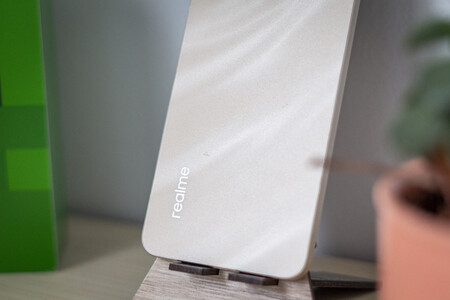
The Realme Note 70T is visually appealing, utilizing minimalist materials and construction. The phone may not flaunt an extravagant design, but it is comfortable in hand and feels very sturdy . The back panel caught my attention right away: it’s flat with a matte texture that resists fingerprints well.
Its camera module is sleek without being overly prominent, positioned neatly in a square format reminiscent of Apple’s design language. It’s not drastically different from other smartphones in the lineup, but the subtle change from a standard rectangular module gives it a touch of elegance.
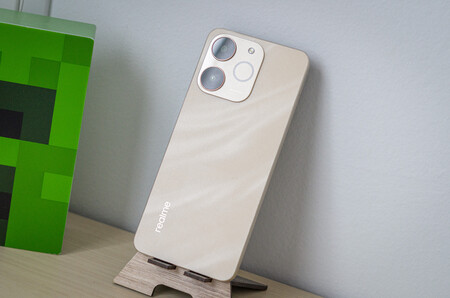
The back of the Realme Note 70T is stylish, although the materials indicate it’s an entry-level device.
Another notable feature is the rear, made from a perfect polycarbonate material with a shimmering finish in the golden color I reviewed. What’s new is the addition of a configurable LED ring (a feature returning from the C71), which serves various functions that I will describe later. However, there are no major surprises—both for better or worse—with this rear cover.
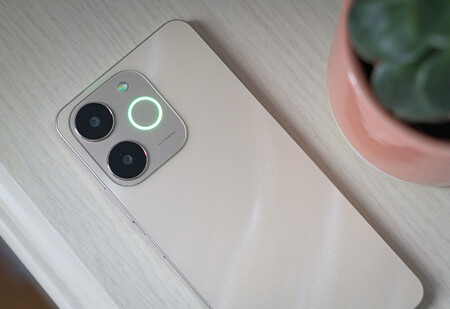
The ‘Pulse Light’ from Realme revisits an old Android hallmark: the notification LED.
The squarer profile of smartphones is a trend I appreciate, as it results in a more robust feel. Even though there is a sacrifice in ergonomics compared to curved backs, these flatter designs provide enhanced sturdiness.
While the materials used are entry-level, there’s room for improvement in the button design. The volume and power buttons feel decent but could benefit from more clicky feedback . They give an impression of eventually wearing down. On the whole, the placement of elements is conventional: the SIM tray is located to the left, while a USB-C port, a microphone, and a 3.5mm headphone jack are positioned at the bottom.
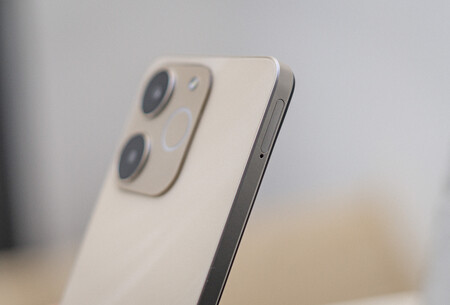
Although it’s not a heavy phone, the synthetic material helps reduce weight. However, the large screen size, following market trends, makes it quite bulky. I can’t quite understand the reason behind the ‘Note’ addition in 2025, considering most screens exceed 6.5 inches. While large displays appeal to consumers who enjoy multimedia, portability is increasingly compromised.
Speaking of the screen, it’s evident this is an economical smartphone: its bezels are noticeable, especially the lower chin, which detracts from the “all-screen” look. I expect to see more panels adapting to frontal specifications as time goes on, especially with the top notch resembling designs from five years ago.
A Screen from the Past

Offering a strong display with a tight budget is a challenging task. Realme has opted for a modest IPS panel : HD+ resolution, a maximum brightness of 563 nits, and a refresh rate of 90Hz, which means there’s limited expectation for pricing this low.
For an entry-level device, the display performs adequately, primarily serving the purpose of providing a large screen for media consumption. However, contrast levels are somewhat lacking, and color accuracy tends to oversaturate.
As stated, this affordable phone accommodates streaming casual content effectively, showing decent viewing angles. However, it dims notably when tilted slightly. The touch responsiveness could be improved, as there’s a detectable delay while scrolling on webpages.

The display delivers good visuals without any extravagant features. Its biggest flaw is the outdated HD+ resolution.
Realme has included options in its Android OS for screen customization , such as the “Screen Color Mode.” I usually prefer the “Vivid” mode on their devices, but this time, I found “Natural” more fitting, resulting in a better color representation without excessive saturation.
Does this 6.78-inch panel have any issues? My only complaint is its size, which is a personal preference. Compared to the impressive AMOLED displays appearing in mid-range models, the differences are stark for those sticking to this budget.
In outdoor conditions, it holds up decently; despite not having a brightness level comparable to premium models, I had no difficulties reading it while walking under the Spanish sun in September—albeit it is not very bright .
Additionally, Realme has not mentioned any extra layer for protection; hence, care is advisable. Thankfully, it comes with a pre-installed plastic cover, as the glass seems prone to scratches.
Biometrics
The beauty of Android’s diversity means that even in the entry-level segment, you don’t have to compromise on biometric unlocking methods. The Realme Note 70T offers a fingerprint sensor; however, it’s not in the display, unlike most modern smartphones.
It’s located on the unlock button, making it hard to miss. Unfortunately, it could see improvement: I’ve often found myself reverting to the PIN because it fails more than it should. Using the trick of registering the fingerprint twice helps alleviate some of those errors.
It’s not the fastest, which is why I enabled facial recognition shortly after I started using the phone. This feature relies on the front camera, akin to other recent Android devices, and while it’s not rapid or effective in low light, it alleviates dependence on the inconsistent fingerprint sensor.
This aspect leaves much to be desired; it seemingly appears to be an area where cost reductions significantly impacted the Realme Note 70T . It’s unfortunate since a more robust unlocking option would be highly appreciated.
Audio
Audio quality also suffers due to the device’s low budget constraints. While it’s not alarming, it’s worth noting: the phone only has one speaker located at the bottom. Stereo sound is absent , even when using the call speaker, and this single speaker is rather unimpressive.

The Realme Note 70T has a single speaker that offers slightly above average sound quality.
It lacks bass response, and higher frequencies become muddled when the volume is turned up. However, for calls and notifications, the maximum volume performs adequately in all settings.
Using Bluetooth headphones results in a more pleasant experience: the sound is clear without lag, relying mostly on the quality of the headphones themselves. This Realme device supports common Bluetooth codecs: AAC and SBC, but because it uses a Unisoc chip, it is not compatible with Qualcomm’s aptX codec, which I did not miss.
There’s no spatial audio or Dolby Atmos support, but Realme has included its OReality Audio feature, which attempts to create a surround-sound experience. However, the difference is minimal; the “Theater/Cinema” mode simply boosts volume without providing substantial audio enhancement.
Good Enough for Daily Use, Without Expecting Much

This segment does not allow for high expectations regarding performance. The Unisoc chip is focused on efficiency, and its internals are reminiscent of older generations. The result? An Android device that approaches tasks with a relaxed attitude.
Installing apps from the Play Store and expecting speed while executing another is simply unrealistic. While affordability indicates that performance wouldn’t be its highlight, this was clearly demonstrated during my testing.
Though this lag is not crippling—besides the occasional long loading times —I’ve experienced no significant freezes either. The lightweight Realme software aids in minimizing excessive lag, but a smoother user experience is overdue at this price point.
When not burdened by several apps running in the background, the refresh rate and 90 FPS generally remain stable. Exceptions arise with power-hungry apps like YouTube, where the interface tends to lag more than desired.
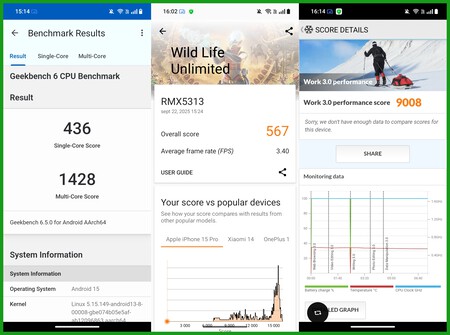
Realme Note 70T | Realme C71 | Realme C67 | Xiaomi Redmi 14C | Motorola Moto G55 5G | |
|---|---|---|---|---|---|
PROCESSOR | UNISOC T7250 | UNISOC T7250 | Qualcomm Snapdragon 685 | MediaTek Helio G81 Ultra | MediaTek Dimensity 7025 |
RAM | 6 GB | 8 GB | 8 GB | 8 GB | 8 GB |
GEK BENCHEMARK. | 436 | 437 | 474 | 413 | 1.020/2.424 |
3D MARK Wild Life Unlimited | 567 | 568 | Not Executable | 604 | Not Executable |
PCMARK WORK | 9,008 | 9,177 | 7,391 | 9,474 | 13,169 |
This phone is not designed for gaming , mainly due to the Mali-G57 MP1 GPU within the SoC, which struggles with graphically intense titles like ‘Fortnite’. That said, it manages casual play in ‘Call of Duty: Warzone’ but falters on ‘Genshin Impact,’ barely reaching 25 fps with all graphics options minimized.
However, the efficiency translates to minimal heat generation: after an hour of use, it only felt slightly warm, which is inconsequential. There are no AI-specific applications beyond Google’s optional Gemini, underscoring its role as an entry-level smartphone.
Don’t Call It a Phone, Call It a Powerbank
What to expect from a phone boasting a massive 6,000 mAh battery, a lower resolution screen, and a chip focused on efficiency? It should easily last at least a couple of days on a single charge. And indeed, it delivers.
This doesn’t come as a shock, as the Realme C71, which I evaluated previously, shares much of the specification lineup. However, while the C71 showcases the best in battery tech, the Note 70T focuses on endurance. It also boasts exceptional battery life , making stray from charging overnight a non-issue.
Realme’s 2025 lineup is impressive across the board, from high-end offerings like the Realme GT7 Pro to the mid-range with the Realme 14 Pro+. Notably, their entry-level models highlight enhanced battery density—a true joy!

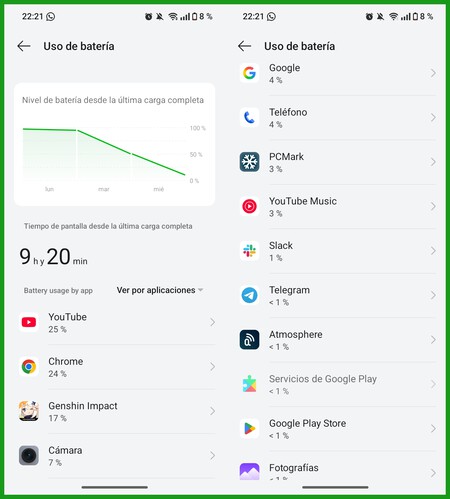
Although I did not achieve close to four days like with the C71, I comfortably managed over 72 hours without a charge, enjoying nine and a half hours of screen time in that period.
Intensive usage cycles still allowed about two days of battery life with roughly ten hours of active screen time, a very impressive autonomy for mixed-use of browsing, calling, photography, and some GPS navigation—intensive tasks like gaming or professional-grade editing, however, may lead to depletion more quickly.
Still, the sluggish fast charging is disappointing: losing 30-40 euros with the Realme C71 means sacrificing 45 watts of charging power. The Realme Note 70T only offers 15 watts, making for an excessively slow charging time close to three hours.
This is excessive, but I must admit that, considering its outstanding battery life, I’ve consistently charged it overnight, leading to zero complaints. Users needing rapid charging, however, will find no room for flexibility .
Furthermore, the included charger feels like a rare bonus, especially for entry-level gadgets, making sense on a budget device. By contrast, it’s harder to justify it in devices priced at €1,000—this scenario is prevalent within lower-cost models.
Trimmed Android That’s Open to Improvement
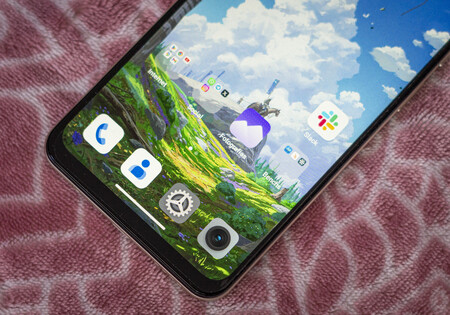
The Realme Note 70T comes with an easily recognizable software layer. Android 15, paired with a light version of Realme UI, makes the OS experience close to a pure Android.
This pragmatic choice lightens the system for contained hardware, resulting in minimal animations and transitions , although some aspects feel less polished, much like the previous Realme entry-level device I reviewed.
Despite its simplicity, the device retains many useful functions. Scanning through the settings, I found practical options like a “pocket mode” to prevent accidental touches, gestures for launching apps with a locked screen, and a fully customizable sidebar—all features hinting at its utility beyond being just an economical choice.
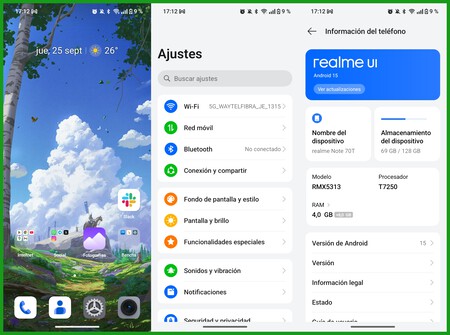
As typically expected, no advanced AI suite is included, but the essential Google suite is present. This includes both Gemini and its assistant option, “Rodea para buscar,” although the fluency is notably inferior to other models.
How long before this software version feels outdated? Realme is not particularly noted for frequent updates, and it’s unlikely this model will receive many Android upgrades. At the time of the review, it boasted August 2025 security patches and Android 15—considering Android 16 launched recently, this isn’t too disappointing.
However, the experience often sours owing to bloatware ; this phone suffers from excessive pre-installed apps and games that clutter the initial setup process. Thankfully, most of these can be removed, yet it still leaves a negative first impression.
A Single (and Decent) Camera

In a market where camera modules compete to add more sensors, the Realme Note 70T maintains straightforwardness—similar to its recent releases. While it features two sensors on the back, you’ll realistically use only one: the second being a depth sensor that adds minimal value for portrait mode.
The primary camera includes a 13-megapixel sensor with an f/2.2 aperture , while the front houses a 5-megapixel selfie camera. The camera application is straightforward and lacks advanced features like a “Pro” mode available in other models.
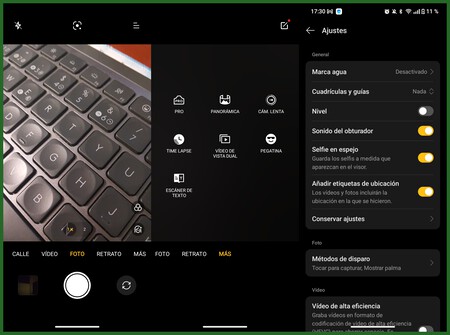
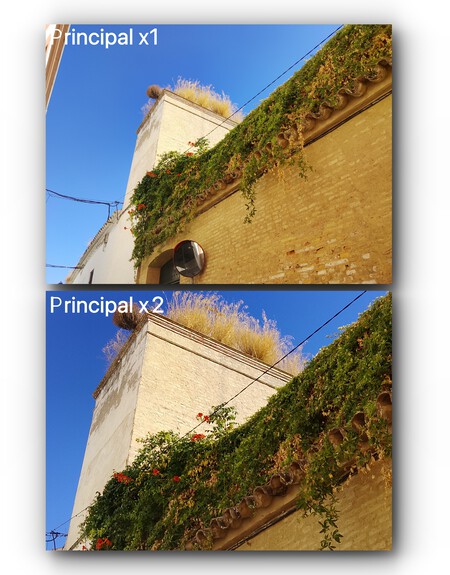
Focusing on output, the main camera performs adequately in good lighting conditions, as evident in the photographs. Detail levels are decent for this price range, with a color processing that, while slightly over-saturated, looks great for social media.
However, it struggles with dynamic range ; when capturing scenes with shadows and highlights, it tends to either blow out skies or overly darken shadows without a balanced middle ground. While this shortcoming is acceptable at this pricing tier, detail crispiness relatively satisfies.

The camera app offers a direct option for a 2x digital zoom. As expected—due to the lack of a telephoto lens—the output loses sharpness with cropping from the main sensor. This zoom can briefly assist in re-framing, though I had no expectations for high detail.
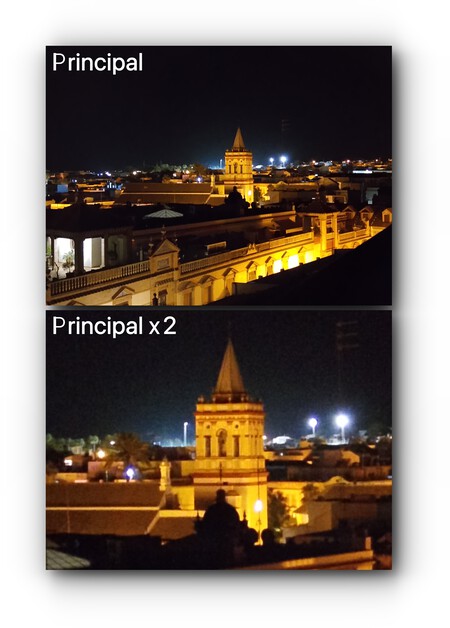
While the main camera performs decently in daylight, it struggles significantly in low-light conditions—a common scenario for budget devices. In moments with limited artificial light, like indoor shots, the camera does an okay job, but once outside, these limitations become apparent: city lights often overexpose, losing detail in shadowy areas and showing notable noise.

The 2x digital zoom, useful in the daytime, becomes virtually useless at night. As shown in the comparison, images appear way over-processed, revealing a “painted” effect that obscures detail, reminding you that this sensor is basic.
Not everything is grim; the difference between shooting in automatic mode and using “Night Mode” is significant . The software processes the scenes over a few seconds, raising exposure and recovering more details, improving handling with highlights. It won’t perform miracles, but for casual night shots, this mode is indispensable.

The front camera, despite only 5 megapixels, produces surprisingly acceptable results. The portrait mode functions adequately, managing to separate subjects without severe errors around tricky areas like hair or glasses edges. Detail levels are sufficient , in line with its resolution, but overall processing and background blur appear more than decent for such an affordable device.

Realme Note 70T: Xataka’s Opinion and Rating

The Realme Note 70T arrives to upgrade the company’s most economical range, echoing its sibling, the Realme C71. At around €100, it’s evident we’re looking at an entry-level device with the cutbacks expected across nearly all features : from an HD+ resolution display to limited performance.
What stands out positively is its outstanding autonomy—it’s a device built for extended use, allowing for days without frequent charging. However, this advantage is undermined by a sluggish 15W charging speed. Would I choose it over direct competitors? That’s a tough question. If your only goal is prolonged battery life for minimal investment and you don’t mind three-hour charging times, the Note 70T has a clear niche .
6.0
Design
6
Display
5.5
Performance
5.5
Camera
5.75
Software
6
Battery
7.5
Pros
- Outstanding battery life—forget about the charger for days
- Retains the 3.5mm headphone jack
- A price around €100, incredibly difficult to beat
Cons
- Performance is very limited
- 15W charging is painfully slow given the large battery
- HD+ resolution display with touch response that needs tweaking
- Only a single speaker

realme Smartphone Note 70T, 4+128GB, 6000mAh Battery, Ultra-thin Design of 7.94mm, IP54 ArmorShell Protection
Prices may vary. We get commissions from these links.
This device was provided for testing by Realme. You can read our company relations policy and how we conduct these reviews.
In Xataka | Best phones under €200 (2025). Insights from the experts at Xataka.