

A Surprising Surge: The Octopus Invasion Along the English Coast
It was at the beginning of 2025 when science revealed remarkable insights into the world of octopuses. While their intelligence was already known, it became clear that these fascinating creatures possess a “brain” in each arm, allowing them to act with astonishing precision and independence. This newfound knowledge coincided with an influx of octopuses that has captivated the United Kingdom.
An Unprecedented Invasion
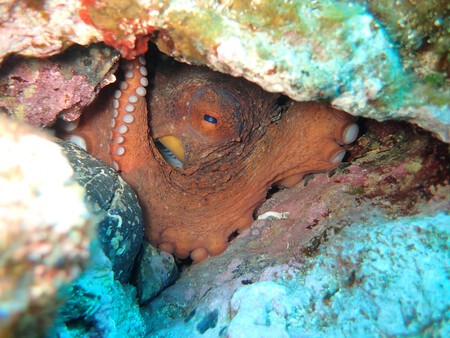
The southern coast of England is experiencing an unusual phenomenon: a massive arrival of Mediterranean octopuses, a species previously rare in British waters. Fishermen in Brixham, the primary port of the Southwest, are reaping significant rewards—individuals like Arthur Dewhirc are reportedly earning up to £10,000 extra each week.
Between January and August of 2025, over 12,000 tons of octopuses were auctioned, with daily peaks reaching 48 tons. Such statistics have earned the town the title of the “octopus capital” of the UK. Local restaurants and shops have eagerly capitalized on the trend, incorporating octopus into menus and decorations, thereby establishing it as a local emblem of an exceptional year.
Climate Change as a Catalyst
Scientists attribute this unusual occurrence primarily to climate change. According to Professor Steve Simpson from the University of Bristol, the warming of British waters has rendered them more favorable for the northern range of the Mediterranean octopus. The implications are stark: a direct, visible consequence of climate change is now evident in the increasing abundance of a species that had previously shunned those latitudes.
The implications of such a shift are significant. What once seemed impossible has now materialized, revealing a connection between rising temperatures and marine life.
Benefits Coupled with Threats
For many fishermen, this boom has translated into welcome economic relief. However, for those who rely on crabs and lobsters, the situation is ominous. The octopus, with its voracious appetite and intelligence, has begun to dominate local ecosystems, invading crabbing traps and consuming crustaceans whole.
Veteran fishermen like Jon Dornom from Salcombe recounted an initial excitement over the sudden influx of these “aliens” in their traps. However, this enthusiasm quickly turned to despair as crustacean populations began to decline. Without intervention, they worry that a once-thriving catch could dwindle to nothing but empty crab shells.
The Uncertain Future of the Invasion
Historically, the last notable surge of octopuses in English waters occurred in the 1950s. This previous invasion also vanished within just a few years, highlighting the unpredictable nature of such phenomena. Fishermen remain on edge, as their economic futures now hinge on not only the octopus boom but also the potential ramifications on crustacean populations.
Cultural and Social Impact
The emergence of the octopus has sparked more than just economic impacts; in Brixham, it has morphed into a cultural symbol. Buildings now feature vibrant murals, neon signs illuminate the harbor, and local chefs have gone viral for their inventive octopus recipes. This transition from exotic rarity to a mass consumption product has generated excitement among locals and tourists alike.
The enthusiasm surrounding octopuses is palpable, yet it contrasts sharply with the apprehension of those who fear that the traditional species crucial to local diets may be at risk.

Balancing Bonanza and Fear
The octopus invasion along the southern coast of England underscores the complex interplay between climate change, the fishing economy, and marine ecology. While some celebrate what seems like an unexpected windfall, others harbor fears of an ecological disaster that could permanently alter local ecosystems.
The experience of the 1950s serves as a cautionary tale: octopuses can disappear as suddenly as they arrived. However, with global warming shaping marine environments, such booms may become increasingly commonplace. Fishermen today must recognize that their livelihoods no longer depend solely on the sea but are also influenced by shifting climatic patterns and the curious behaviors of a creature that has become both a blessing and a challenge.
Image | Pexels, Martijn Klijstra
In Xataka | We knew the octopuses were intelligent. But not to the point of having a “brain” on each arm.
In Xataka | The octopuses are not aliens, and scientists have had to go out to explain why.