
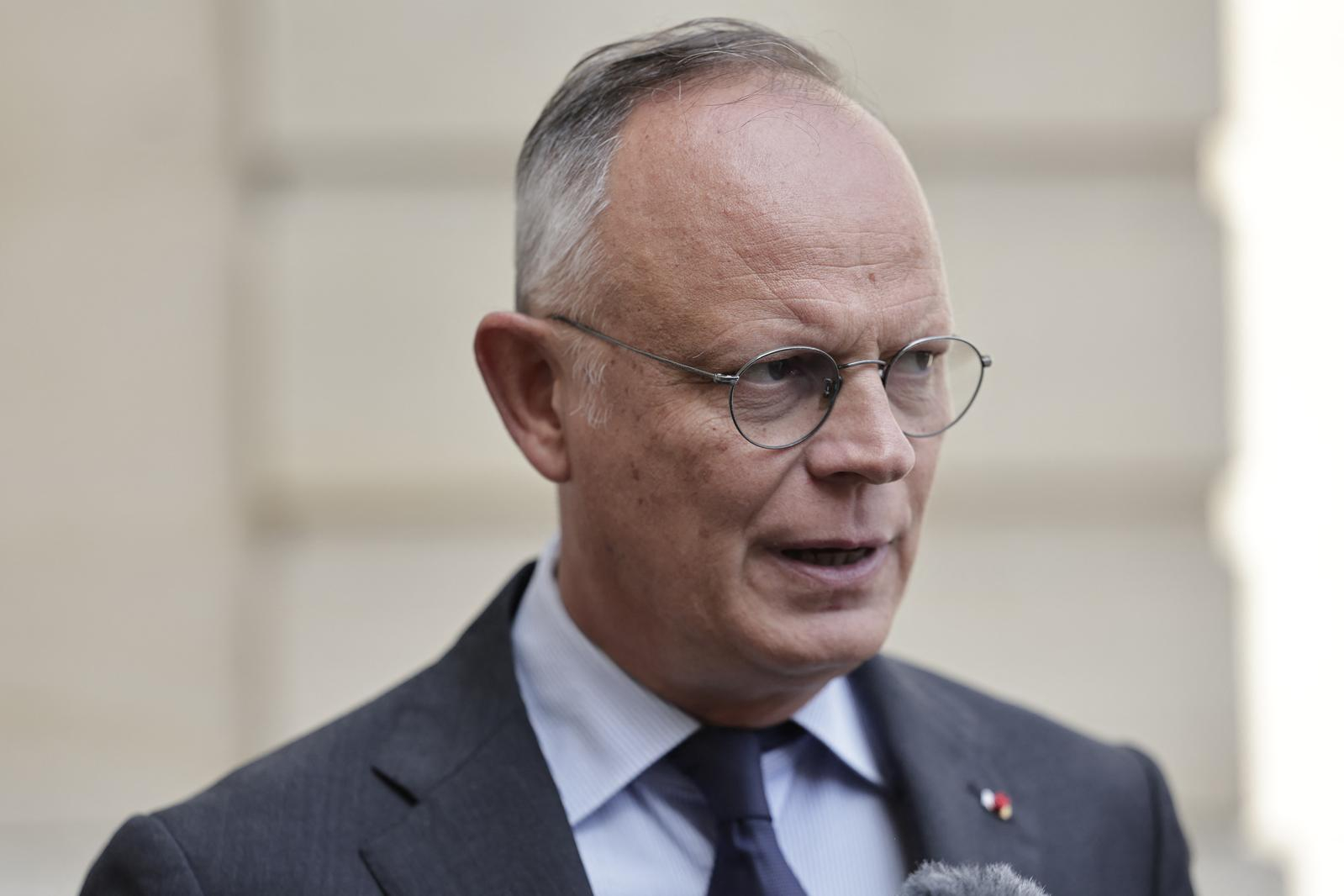
Édouard Philippe, maire du Havre, président du parti Horizons et ancien Premier ministre, s’adresse à la presse après une rencontre avec François Bayrou pour discuter du scrutin proportionnel, à l’hôtel Matignon, le 22 mai 2025. ( AFP / STEPHANE DE SAKUTIN )
“Si nous voulons faire face à cette future diminution de la population active, nous aurons besoin, et nous devons l’assumer, de faire venir des compétences de l’étranger” a ajouté l’ancien Premier ministre.
In a recent statement, Édouard Philippe, the former French Prime Minister and current mayor of Le Havre, outlined the pressing demographic challenges facing France. During an interview on France Inter, Philippe warned that the nation is on the brink of a demographic trap characterized by an aging population and declining birth rates.
The former Prime Minister expressed the need to raise the retirement age and increase the share of capitalization in the pension system. “It’s very precisely what I say. And I even say that everyone who claims we can lower the retirement age without addressing our demographic situation is in denial of reality,” he mentioned. The potential solutions he proposed, such as those taken by countries like Italy and Spain, underline the necessity to adapt to changing circumstances.
“When it comes to saving the portion of their pension system that relies on distribution, other nations have accepted that working longer is essential,” he added, indicating a resolute stance in favor of reforming France’s pension framework.
“Assumer” de “faire venir des compétences de l’étranger”
Philippe further elaborated that one crucial step in this process is to construct a balanced system, emphasizing capitalization as a complementary component rather than a complete replacement for distribution. “We can realistically aim for a 10%, 15%, or even 20% capitalization rate. In Germany, it’s around 15%. Thus, I believe we can push to reach this goal in France,” he asserted.
“This endeavor will take time, but it is essential. Such reform would bring greater individual freedom for those who wish to retire, which is invaluable, and importantly, it can ensure the future funding of pensions,” Philippe continued during the discussion. He stressed that without action, the consequences could be dire for future generations.
He pointedly stated that, “If we want to face this future decrease in the active population, we will need, and we must accept, to bring in skills from abroad.” As president of the Horizons party, Philippe underscored the necessity for foreign students in French universities and foreign medical professionals within the healthcare system. He articulated disappointment that those who engage in the rhetoric of a “great replacement” often fail to acknowledge the vital contributions these individuals make to French society.
Philippe’s message is clear—the trajectory for France’s workforce and pensions requires strategic adjustments and structural reforms. The call for bringing in foreign expertise isn’t merely a suggestion; it’s a necessity to sustain the country’s demographic and economic stability.
In conclusion, Édouard Philippe’s candid reflections raise critical questions about the future of France’s demographic and economic landscape. His focus on immigration and the need for reform in pension systems highlights an urgent dialogue that must occur regarding the sustainability of social systems amidst evolving demographic trends. As France faces these daunting challenges, proactive measures will be essential for ensuring a thriving society for generations to come.
General News – 2