
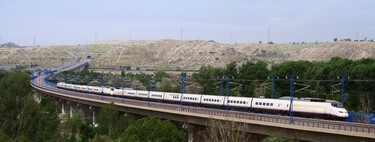
Portugal: A Golden Opportunity for Renfe
“Portugal is a great opportunity for Renfe.” This phrase encapsulates Renfe’s forward-looking strategy as it sets its sights on expanding operations beyond Spain, shifting focus to its neighbor. The Ministry of Transportation sees Portugal as a new frontier for growth, capitalizing on favorable geographical and infrastructural advantages.
The Importance of Track Width
A significant factor in Renfe’s strategy lies in track width. With 15 units from the Series 106, and plans to add 13 compositions from the Series 107, Renfe aims to operate a fleet of 43 high-speed trains with variable gauge capabilities. These trains will be pivotal for circulation in Portuguese territory, aligning with the company’s medium-term objectives.
Challenges in France
Renfe has long sought to enter the French railway market, but it faces numerous regulatory hurdles that complicate its expansion plans. Restrictions and barriers in France have led to a strategic pivot toward Portugal, where compatible track widths present a unique opportunity for seamless operations.
The Role of Avrils
A game-changer in this shift is the agreement reached between Renfe and Talgo concerning the Avril trains. Historically plagued by delays and technical issues, these trains are designed with the capacity to switch between Iberian and international gauges. This adaptability is key, allowing Renfe to operate routes without requiring passenger transfers, thereby enhancing efficiency and customer convenience.
In recent agreements, it has been confirmed that the Avril trains operating on international gauge will be modified for gauge transitions, at a cost of over 130 million euros. This investment will equip Renfe to expand its service across the Iberian Peninsula, optimizing operational flexibility.
Strategic Change and Competitive Advantage
The Ministry of Transportation acknowledges that Renfe will soon be the sole operator capable of providing international high-speed rail services connecting Portugal with Spain. This unique positioning gives Renfe a competitive edge as the Iberian rail market liberalizes.
While initial plans involved utilizing some of the Avril trains for France, challenges in homologation have redirected Renfe’s expansion efforts toward Portugal. The alignment of track widths makes the Portuguese market increasingly attractive, especially with forthcoming connections like the Madrid-Lisbon line scheduled for completion by 2030.
The Iberian Exceptionality
Both Spain and Portugal’s railway systems predominantly utilize Iberian gauge, contributing to their isolation from the broader European rail network. However, with the European Union’s commitment to reducing this “Iberian exception,” there are plans in place to transition the Madrid-Lisbon route to international gauge standards.
Nonetheless, the Lisbon-Porto high-speed line remains built upon Iberian gauge, restricting cross-border services. This situation creates barriers for new entrants into the market. Yet, Renfe’s Avril trains, capable of transitioning between gauges, offer a distinct advantage. They can seamlessly operate between Madrid and Porto through Lisbon, a service that currently no other operator can provide.
Conclusion
Renfe’s shift toward Portugal represents not just an expansion opportunity but a strategic move to leverage existing infrastructural advantages. By evolving its fleet and adapting to new market conditions, Renfe is poised to become a leader in the Iberian high-speed rail arena, capitalizing on the unique geographic and operational advantages that Portugal offers. As the company prepares for this journey, the future of rail connectivity in the region appears promising.