
The Alarming Presence of Microplastics in Our Food
Living with microplastics has become disturbingly commonplace in our diet. We encounter them in sources as routine as bottled or tap water, and now alarming studies show their presence even within our bodies, including breast milk and the testicles. Researchers concentrated on the food chain have turned their focus to crops, revealing that the issue is more critical than we previously realized.
The Groundbreaking Study
A recent study published in the journal *Environmental Research* marks a significant advancement in microplastic research. For the first time, researchers utilized a technique called radiolabeling to quantify the absorption of nanoplastics by plants. The findings, based on tests with radishes , serve as a crucial wake-up call regarding our food safety concerns.
Overcoming Challenges
Studying nanoplastics within biological tissues presents several challenges, primarily differentiating them from the surrounding organic material. Researchers from the University of Plymouth overcame this obstacle by synthesizing polystyrene nanoplastics labeled with a radioactive isotope, specifically carbon-14 . This innovative approach allowed for the precise monitoring of plastic movement within the plant system.
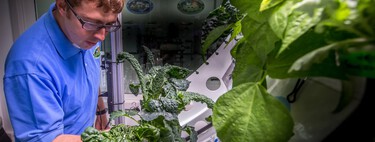
<img alt="We have been growing lettuce in space for years. Now we have discovered that they are more likely to make us sick" width="375" height="142" src="https://i.blogs.es/983224/nasa-lechuga/375_142.jpeg"/>Microplastics are especially prevalent in agricultural soils, making them a significant concern for plant intake.
The Methodology
The research was meticulously formulated to prevent surface contamination. The fast-growing radishes were cultivated in a hydroponic system containing a liquid nutrient solution, differing from their conventional soil habitat. Crucially, only the fine, non-fleshy roots interacted with water containing nanoplastics. This ensured that the edible parts of the radish were entirely isolated from the contaminated environment.
Following a five-day exposure period, the radishes were analyzed to determine if the nanoplastics had been absorbed and how they traveled within the plant.
The Results: Alarming Discoveries
After the exposure period, the results were both surprising and alarming. Radioactivity was detected throughout all parts of the radish exposed to the nanoplastics, showcasing significant absorption and transportation of these particles. Remarkably, the radishes retained almost 5% of the nanoplastics from the water, with 65% concentrated in the non-fleshy roots where absorption occurred.
More distressing was the discovery that 25.5% of the nanoplastics ended up in the edible parts of the radish. Additionally, even the buds and leaves accumulated nearly 10% of the total absorbed particles, indicating a widespread distribution throughout the plant.
Implications of the Findings
These findings suggest that polystyrene nanoplastics can navigate the Caspary band , a protective layer in plant roots that ordinarily blocks unwanted substances from entering the vascular system. When these barriers are breached, nanoplastics are free to travel throughout the plant, including the parts we ultimately consume.
The Importance of the Research
This research highlights a quantifiable pathway for human exposure to nanoplastics via our diet. Unlike animals, which can rapidly eliminate contaminants through feces or urine, plants lack these excretion methods. Consequently, they act as potential ” sinks ” for these microplastics, accumulating them over their lifespans.
The microscopic size of these particles poses an additional risk. They are small enough to bypass biological barriers, potentially entering human bloodstreams. The full implications of these microplastics on human health remain uncertain, prompting scientific inquiries into their distribution and effects on various biological systems.
<img alt="Nanoplastics are a risk that used to go unnoticed. Now we have a way to detect them" width="375" height="142" src="https://i.blogs.es/d87c50/pexels-kampus-production-8381799/375_142.jpeg"/>Future studies are crucial to understanding whether other plastic types exhibit similar behavior, how various soil compositions impact absorption, and the effects on longer growth cycles. This groundbreaking research illustrates that microplastics are not merely pollutants in oceans and air; they have found a way to insidiously infiltrate our food supply, right at the roots.