
Putin’s Threats: A Looming Conflict Over Respect and Sovereignty
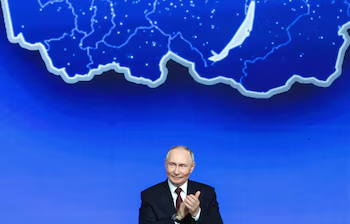
Vladimir Putin, the long-standing president of Russia, recently issued stark warnings to Europe and NATO regarding the potential for a large-scale armed conflict. During his annual speech, he dismissed accusations of Russian aggression as the fabrications of “crazies,” yet simultaneously indicated that Russia would not tolerate disrespect or isolation of its territories, particularly the Kaliningrad enclave.
Putin’s Position on Allegations of Aggression
In his address, Putin spent considerable time refuting claims that Russia intends to attack Europe or NATO. He characterized these allegations as unfounded and exaggerated, aiming to portray Russia as a victim of misinformation. Nonetheless, the underlying tone signaled a readiness to respond aggressively to perceived threats. This duality in his rhetoric raises critical questions about Russia’s intentions and the potential for escalation.
Warnings About Military Conflict
Putin’s statements included explicit threats regarding the Kaliningrad enclave, which is strategically located between Lithuania and Poland. He made it clear that any attempts to isolate this territory would be met with severe consequences. The Russian president emphasized, “If threats of this kind are made against us, we will destroy them,” indicating a readiness for a military confrontation if Russian sovereignty is challenged.
He warned that actions leading to such a conflict could escalate dramatically, transforming regional tensions into a full-scale armed conflict. This stark realization reflects an increasingly fraught geopolitical environment, where miscommunications and provocations could easily spiral out of control.
Rising Rhetoric in Europe
The rhetoric surrounding the situation has intensified in recent weeks. Dutch Prime Minister Mark Rutte has suggested that Europe must prepare for a conflict akin to the world wars of the past. This perspective aligns with Putin’s warnings, highlighting a broader sentiment that Europe needs to brace itself for potential aggression from Russia.
The amplification of military discourse on both sides may indicate a new phase in the ongoing tensions, making discussions of diplomacy even more critical. The prospect of a large-scale war looms, as leaders on both ends grapple with the implications of their statements and actions.
Implications for Global Security
The atmosphere of hostility between Russia and the West has profound implications for global security. The stakes are high, and the consequences of miscalculations could be disastrous. With nuclear arsenals still a present threat, the world watches with bated breath as these two powers navigate a precarious political landscape.
The situation calls for measured responses and diplomatic engagement. It is crucial for leaders to avoid falling into the trap of escalation and to find avenues for constructive dialogue before it is too late.
Conclusion
As Putin reinforces his demands for respect and threatens military action against perceived antagonism, Europe must respond with strategic caution. The dichotomy between dismissal of fears and warning of conflict presents a complex challenge for international relations. With tensions running high, the need for diplomacy and thoughtful engagement has never been more pressing. The world holds its breath, awaiting the next moves from both sides in this unfolding drama.