
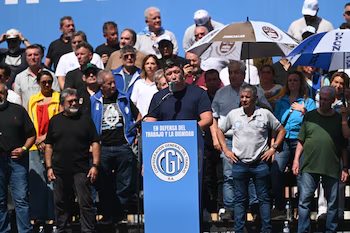
Labor Reform: The Stalemate of the CGT Against Government Pressure
The Current Landscape
In the two years of Javier Milei’s administration, the General Confederation of Labor (CGT) has organized four mobilizations and three general strikes. However, these efforts appear ineffective against the proposed labor reform, leaving the union in an eternal loop — a cycle it cannot escape. The protests have failed to alter the course of the government’s labor policies or address challenges previously faced under different regimes.
A Weakening CGT
The landscape of labor representation has markedly changed since the powerful days of the United Metalworkers’ Union (UOM) under Lorenzo Miguel in the 1970s. The current CGT represents only a fraction of workers, primarily due to an informal employment rate of 45%. Many union members no longer align with traditional leaders, evidenced by support for outsiders like Milei instead of established Peronist figures.
The union, which once operated like a disciplined army, now finds it challenging to mobilize effectively. The motto of the past—“hit to negotiate”—seems outdated; today’s leaders find themselves unable to both challenge and engage in fruitful negotiations.
Shifts in Union Leadership
The CGT now exhibits a more dialogue-oriented approach, especially after the departure of past leaders like Pablo Moyano, known for his staunch resistance. This shift comes while facing a government that seems unwilling to negotiate meaningfully. The administration’s approach appears to lean more towards conflict than collaboration, even with its supposed allies.
Missed Opportunities for Dialogue
Milei’s administration has squandered its chance to engage constructively with union leaders willing to reach compromises on labor reform. While the CGT seeks ways to negotiate sincerely, the government has taken a hardline stance, inadvertently empowering less amenable factions within the CGT, similar to aged figures like Moyano.
Examples of Successful Negotiation
Despite the prevailing challenges, there are instances where alliances between labor unions and employers have led to favorable outcomes. Notably, the 5000 employees at Mercado Libre fought through union negotiations to secure their rights amidst pressure from the Truckers Union, highlighting that effective communication can yield better results.
The Power Dynamics at Play
Shifting dynamics indicate that while some leaders like Hugo Moyano continue to achieve limited successes, others, like Daniel Vila, have secured substantial bonuses for their members. For example, while Moyano negotiated a 35,000 peso bonus, Vila outperformed significantly with a 410,000 peso bonus for Mercado Libre workers. This illustrates the stark differences in negotiation effectiveness among union leaders.
An Ongoing Battle
The current labor reform project recently stalled, gaining some time for the CGT to present counterproposals. Despite a minor victory in lobbying, the ultimate fate of this reform remains uncertain, with discussions postponed until February 10. Behind the scenes, a battle continues between union leaders and the government, as the need for a fruitful negotiation remains crucial, especially for the informal sector and those without jobs.
Conclusion: The Road Ahead
As both sides navigate this tense landscape, the question remains: can any meaningful agreement emerge from a stalemate where dialogue and pressure coexist? Both the CGT and the government must reassess their strategies to avoid leaving vulnerable workers in an even tougher position. The clock is ticking, and the future of many hangs in the balance.