
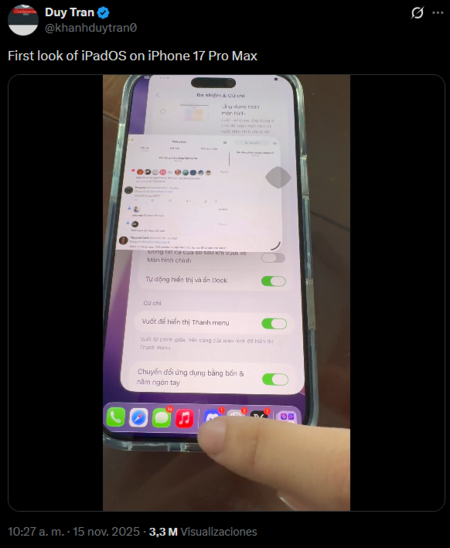
Exploring the iPadOS Hack on iPhone 17 Pro Max
A user recently shared a remarkable revelation on Reddit about installing iPadOS on an iPhone 17 Pro Max. By exploiting a security vulnerability, the user managed to enable features like multitasking, a desktop interface when connecting to an external monitor, and access to desktop apps, highlighting the untapped potential of the iPhone’s hardware.
The Hack: What Went Down
The individual, known as ‘TechExpert2910’, has conducted several tests to showcase the iPhone 17 Pro Max running iPadOS natively—not through simulation or any third-party applications. The results speak for themselves: the device utilizes multitasking capabilities with floating windows, boasts a complete desktop interface, and features an array of apps typically reserved for iPads, all without compromising performance.
Unraveling the Exploit
The hack exploits a vulnerability in iOS version 26.1, tricking the operating system into believing it is running on an iPad. This modification unlocks several key features, including a landscape home screen, iPad-style app switcher, and a richer Dock experience. However, Apple quickly patched this vulnerability in the beta version of iOS 26.2, indicating a keen awareness of the issue.
Why the Hack Works
The Shared Code Base
The success of this hack largely stems from the fact that iOS and iPadOS share a substantial portion of their code. As cited by Wired, iOS and iPadOS are not entirely distinct operating systems; rather, they are variations of the same software, differing only by enabled or disabled features based on the device.
Power to Perform
The iPhone 17 Pro Max is powered by the robust A19 Pro chip and contains 12GB of RAM, making it more than capable of handling iPadOS. Apple boasted at its September event that this chip provides “MacBook Pro levels of computing,” further solidifying its ability to run sophisticated software without lag.
Looking Ahead: The Future of Apple’s Devices
The Foldable iPhone Hypothesis
Many speculate that Apple may be laying the groundwork for a future foldable iPhone. Such a device, equipped with a larger display, could fully utilize iPadOS features, particularly enriching multitasking capabilities.
The Strategy Behind Apple’s Limitations
The hacker’s actions suggest that Apple may intentionally limit iPhone features to encourage users to invest in additional products. Historically, Apple has thrived on a cohesive ecosystem where each device serves a defined purpose. However, unlike Apple, competing brands like Samsung have embraced similar features through systems like DeX without sacrificing their tablet or laptop sales.
Final Thoughts: A Blurred Line Between Devices
This hack sheds light on three critical insights: the shrinking divide between iPhone, iPad, and Mac, Apple’s existing capabilities for a desktop mode on the iPhone that they’re not currently utilizing, and the potential for a foldable iPhone showcasing similar functionalities to iPadOS. While we await Apple’s next steps, the future appears to be heading towards a more unified operating experience across devices.
Cover image | TechExpert2910 (Reddit)
In Xataka | How to send files from your Android to an iPhone using Quick Share with AirDrop