
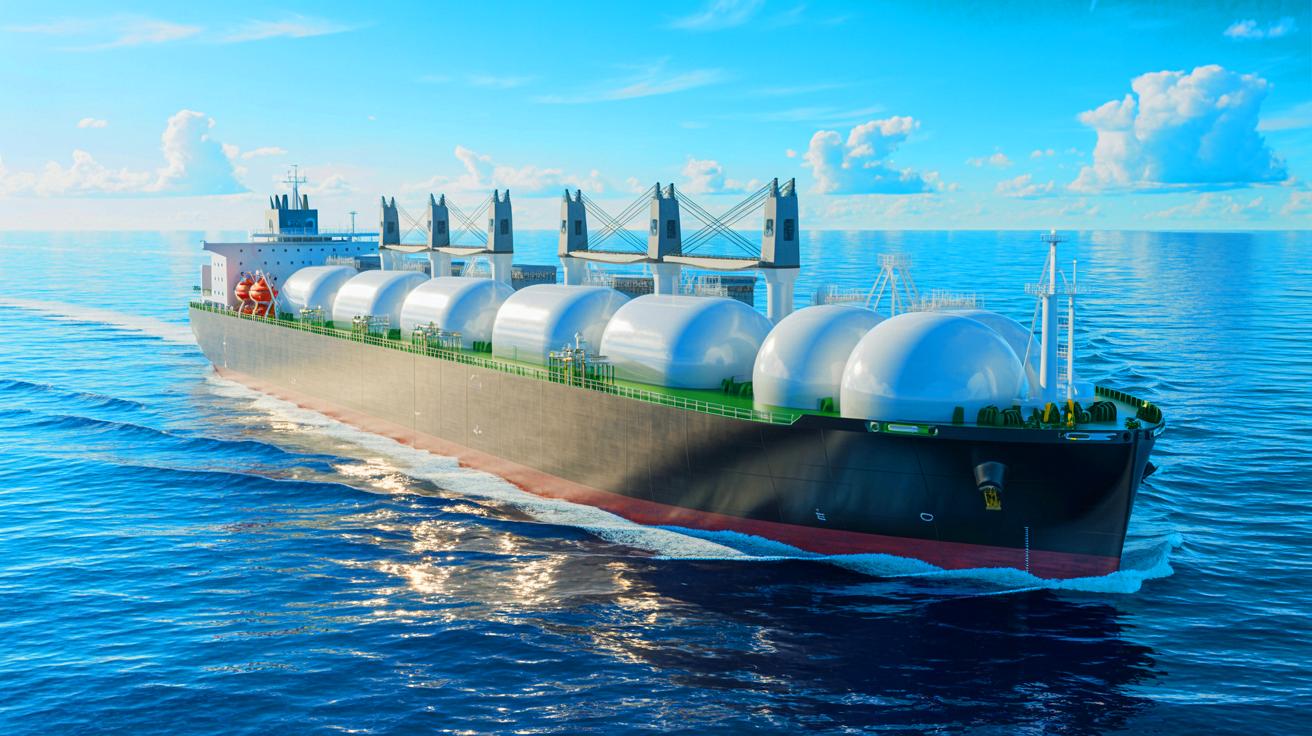
The Launch of Europe’s First CO₂ Transport Ship: A New Dawn in Climate Action
The issue of climate change is one of the most pressing challenges that humanity faces today. With rising temperatures and increasing levels of carbon dioxide (CO₂) in the atmosphere, it is imperative that actions are taken to mitigate this global crisis. In a significant breakthrough, Europe has recently launched its first ship dedicated to the offshore transport of liquefied CO₂, highlighting a monumental step in the fight against climate change. This innovative project embodies a growing ambition: capturing industrial emissions and securely storing them under the sea. The newly designed vessel can transport nearly 400,000 tons of liquefied CO₂ annually, heralding a transformative approach to environmental preservation. How can this technology evolve our environmental policies?
An Ambitious Technology for an Urgent Problem
Carbon Capture and Storage (CCS) has emerged as a promising solution to the climate urgency. The principle involves trapping greenhouse gases, liquefying them, and transporting them to geological reservoirs capable of containing these emissions in the long term. While this technique may sound straightforward in theory, it involves complex processes and significant innovation, particularly in the transportation of CO₂ under pressure and at low temperatures. The ship recently launched by Europe is specifically designed to meet these stringent requirements, adhering to rigorous environmental standards. Although less publicized than renewable energy sources, this technology is gradually establishing itself as an essential tool for decarbonizing industrial sectors that are difficult to electrify, such as cement, chemicals, and steel manufacturing.
Under the Sea: An Old Oil Reserve
The destination for the captured CO₂ is the Nini West platform, situated offshore Denmark. Historically utilized for hydrocarbon extraction, this structure is set to have a new lease on life. Its subsoil, composed of impermeable geological formations, is ideal for safely accommodating the gas. The Greensand project aims to store up to 400,000 tons of CO₂ annually, equivalent to the yearly emissions of nearly 80,000 vehicles. The goal is to gradually increase this capacity to reach a staggering 8 million tons annually by 2030. To realize this ambitious project, hundreds of millions of euros are being invested, underscoring its strategic importance for the energy transition.
Europe Places Its Bets on Offshore CO₂
With this innovative vessel, Europe joins a select group of regions capable of implementing a complete chain of carbon capture, transport, and storage. This technology raises both hopes and debates. Supporters argue that it provides a quick avenue for reducing industrial emissions, while opponents caution that it may serve as an excuse to continue polluting activities, diverting attention from necessary energy transition efforts. Despite these controversies, the project demonstrates that the European maritime industry can play a pivotal role in this transition, as affirmed by Edwin de Vries, a director at Wagenborg Offshore. INEOS hopes this initiative will serve as a model for similar projects across Europe.
Towards a Greener Future?
If all goes as planned, the ship is set to commence commercial journeys by the end of 2025. This project marks a significant advancement for Europe but also raises crucial questions. How far should we go beneath the sea to effectively reduce atmospheric emissions? Could this initiative inspire other global regions to adopt similar solutions? As Europe continues to explore innovative ways to combat climate change, it is essential to consider the balance between technological innovation and the shift toward cleaner energies. What will be the next steps in this global effort to protect our planet?
The implications of this endeavor extend beyond just technological advancements; they can shape future policies and create pathways to sustainable practices. While the ship dedicated to CO₂ transport remains a promising venture, it necessitates collaborative efforts both within Europe and across the globe.
The author has relied on artificial intelligence to enrich this article.
| IN BRIEF |
|