
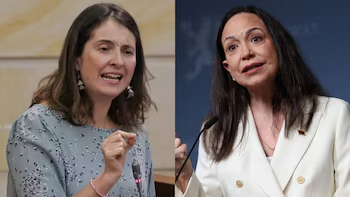
The presidential candidate Paloma Valencia engaged in a video call this Wednesday with Venezuelan opposition leader María Corina Machado, where she expressed appreciation for Machado’s steadfast leadership and dedication to the preservation of democracy in Colombia.
Public Messages Following the Call
Following the meeting, Valencia took to her X account to share a photograph from the call and thanked Machado, stating: “I appreciate our heroine María Corina Machado for her call this afternoon. The collaboration of her entire team in safeguarding democracy in Colombia is invaluable. Her courage and leadership inspire us all.”
Participation of Other Political Figures
In addition to Valencia and Machado, the call featured Venezuelan opponent Humberto Villalobos and Pedro Urruchurtu, director of international relations for Machado’s political party, Vente Venezuela. Villalobos is notable as one of the six opponents who spent 14 months seeking asylum in the residence of the Argentine Embassy in Caracas, highlighting the complexities of the Venezuelan political climate.
Context of the Video Call
This significant video call coincided with Colombia’s traditional Tourist Procession in Popayán, a culturally rich event that symbolizes the spiritual essence of Holy Week in the country. The simultaneous occurrence of a crucial political discourse and a national cultural event has drawn public attention, although no clear connection exists between the two.
Electoral Context and Implications
The timing of this conversation aligns with the intensifying presidential election campaign in Colombia, where Paloma Valencia is emerging as a prominent candidate. Current surveys indicate she ranks high in voting intentions, holding a significant 22.2% in one poll, trailing only Iván Cepeda—who leads with 34.5%. This tight competition underscores a rapidly evolving electoral landscape.
Regional Political Implications
This communication between Valencia and Machado illustrates a broader regional discourse centering on democracy and governance challenges in Latin America. Although specific details of their discussion remain undisclosed, the engagement reflects the growing collaboration among political actors in the region facing similar democratic threats.
As the presidential campaign unfolds in Colombia, the visibility of international contacts and public statements continues to rise, particularly in a political environment characterized by shared regional challenges. This interaction not only signifies personal alliances but also emphasizes collective responsibility towards fostering democratic values across borders.