
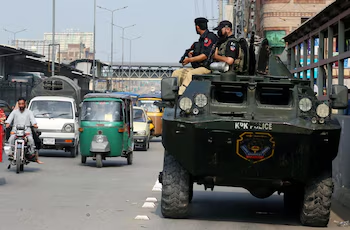
Military Operations Overview
The Pakistan Army has intensified its military operations in Balochistan, recently resulting in the death of eight purported terrorists in a clash in the Kalat district. This action represents a significant escalation against separatist groups accused of receiving foreign support, particularly from India.
Details of the Operation
According to reports from Europa Press, the Pakistan Army conducted a raid targeting an arsenal packed with weapons, ammunition, and explosives. The military action resulted in eight individuals being killed during an exchange of gunfire. The Army’s official statement indicated that these casualties were individuals linked to various terrorist activities in the region.
Seizure of Weapons and Ongoing Operations
During the raid, authorities discovered a substantial cache of arms intended for future attacks on security forces and infrastructure. The Army is conducting ongoing “clearance operations” aimed at neutralizing any other suspected militants hiding in the nearby area. The intensity of these operations reflects Pakistan’s strategic focus on combating what it deems as foreign-backed insurgents.
Targeting the Balochistan Liberation Army
Central to these military campaigns is the Balochistan Liberation Army (BLA), one of the foremost separatist organizations in the province. The state refers to these groups collectively as “Fitna al Hindustan,” highlighting its concerns about foreign influence, particularly from India, in regional unrest.
Links to Domestic Terrorism and Foreign Support
The military has reported that the suspects were involved in domestic terrorism activities within the region, emphasizing their connections to international organizations purportedly providing financial and logistical support. Such findings illustrate the complex web of insurgency within Balochistan, where local grievances are often exacerbated by external influences.
Impact on Local Security and Military Strategy
The Pakistani military is committed to maintaining pressure on separatist groups until their infrastructures are fully dismantled. Recent operations in Balochistan have surged, reflecting a proactive stance aimed at limiting the operational capacity of these groups considered an internal threat.
Alongside military actions, the authorities have emphasized the importance of safeguarding the local populations from collateral damage. Tactical measures are designed to minimize civilian impact while dismantling the networks that facilitate separatist movements.
Conclusion
Balochistan, which shares borders with both Afghanistan and Iran, has been a hotspot for insurgency linked to demands for greater autonomy and control over local resources. Given these complexities, the Pakistan Army’s operations illustrate a broader struggle to assert control over areas plagued by historical tensions and external intervention.
The future of stability in Balochistan will depend not only on military efforts but also on addressing the underlying issues that fuel discontent and separatism within the province.