
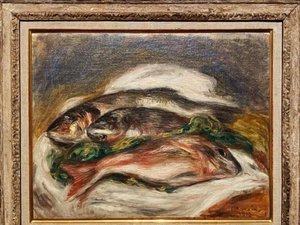
During the night of March 22 to 23, four masked individuals executed a brazen theft at the Magnani Rocca Foundation, located near Parma, Italy. This heist resulted in the loss of three invaluable pieces of art from renowned French masters: Auguste Renoir, Paul Cézanne, and Henri Matisse. The most notable of these is Renoir’s “Pisces,” which carries an estimated value of six million dollars.
The Heist at the Magnani Rocca Foundation
The Magnani Rocca Foundation, a veritable treasure trove of art, found itself at the center of this shocking event. The carabinieri confirmed that the robbery occurred in the town of Traversetolo, where the assailants managed to enter the villa undetected. The three stolen artworks were part of a collection dedicated to French art and highlighted the foundation’s commitment to preserving and showcasing globally significant pieces.
Overview of the Stolen Works
1. “Pisces” by Auguste Renoir
Estimated at six million dollars, “Pisces” is one of the most esteemed works in the foundation’s collection. Painted around 1917, during the twilight of Renoir’s career, this oil on canvas reflects the artist’s distinctive style, characterized by vibrant color palettes and a focus on natural scenes. The rarity of this piece in Italy adds to its cultural significance, attracting both admirers and art historians alike.
2. “Still Life with Cherries” by Paul Cézanne
Another notable piece, “Still Life with Cherries,” was created by Cézanne between 1885 and 1887. This watercolor and pencil work measures 50 x 60 cm and features a simple yet elegant arrangement of cherries on a plate. Its understated beauty exemplifies Cézanne’s revolutionary approach to composition and color, making it a staple in the study of modern art.
3. “The Odalisque on the Terrace” by Henri Matisse
The third stolen artwork, “The Odalisque on the Terrace,” is an aquatint made by Matisse in 1922. This piece portrays two women on a terrace, signifying Matisse’s fascination with themes of leisure and femininity. Signed by the artist himself, the work is a significant example of Matisse’s exploration of form and color, capturing the essence of the early 20th-century avant-garde movement.
Conclusion
The theft of these three masterpieces represents more than just a loss of valuable art; it is an affront to cultural heritage. The Magnani Rocca Foundation, dedicated to the legacy of art historian Luigi Magnani, is now faced with the colossal task of recovering these invaluable pieces. The art community, as well as law enforcement agencies, will undoubtedly rally together in hopes of not only recovering these stolen works but also ensuring the safety of art institutions worldwide. The implications of this heist stretch far beyond the monetary value of the paintings, affecting the cultural landscape and the preservation of artistic history.